Álamos Cine Festival

april 3-6, 2014 alamos film festival header

Come One, Come All… It’s movietime!

A Magical moment in a Magical Pueblo.  Photo: Joel Gastélum

A magical moment in a Pueblo Magical. Photo: Joel Gastélum

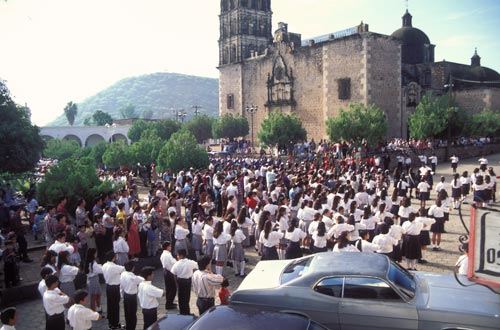
r for the fourth annual alamos film festival, small.The photo above is from the closing ceremony at the Palacio.  The theme of the festival was “100 years of Maria Felix” and Miguel Castillo is singing “Maria Bonita” with Maria Felix’s eyes projected onto the screen behind him.  After he finished singing we played the movie “Yerba Mala” which was filmed in Alamos two years ago.  There were 700 seats filled in the Palacio for the closing ceremony.

Audience inside the palacio for the 4th annual alamos film festival.  alamos, sonora, mexico. 2014. photo - Joel Gastélum

What is a festival without an audience? Photo: Joel Gastélum

Meanwhile outside in the streets

line of people waiting outside the Palacio, Alamos, Sonora, Mexico to watch the film festival.  photo by Joel Gastélum

They came to be part of the film festival. photo- Joel Gastélum

 
More people were lining up outside and we were out of seats, so we made the announcement that we would also show “Yerba Mala” in the Plaza.  An additional 500 people showed up to see it in the plaza.

Outdoor Cine on a plaza side street.  photo - Joel Gastélum.  alamos, sonora, mexico.

Outdoor Cine on a plaza side street. Photo: Joel Gastélum

Maria Felix exhibition

inside the Museo Costumbrista de Sonora.  april 5th, 2014 opening of an Maria felix exhibition.  alamos, sonora, mexico.   photo - Joel Gastélum

Inside The Museo Costumbrista de Sonora. Photo: Joel Gastélum

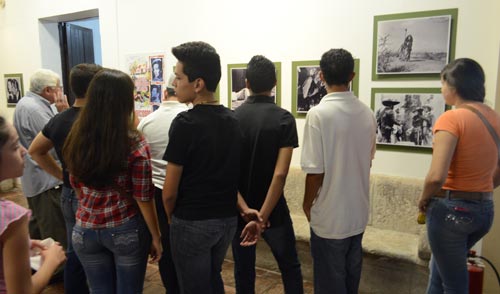
On Saturday, April 5th there was also a Maria Felix exhibition in the museum. The exhibit was organized by our festival president, René Solis and was put together by a curator from the museum of Popular Arts in Mexico City. The exhibition will stay in the museum for at least a month and then will go to Mexico City and Paris this summer. Seen here from left to right are Benjamín Anaya (Presidente Municipal), Maria Duran (Representante de IMCINE) and Monica Luna (representante del Intitudo Sonorense de Cultura).

Inside museo costumbrista de sonora.  april 5th.  maria felix exhibition. photo - Joel Gastélum

History is for us all, young and old. Photo: Joel Gastélum

Here are some of the people that make the Festival happen.

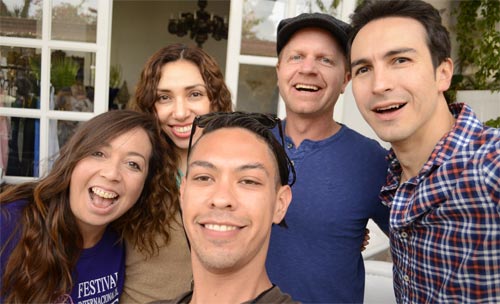
caroline Duarte, larissa veg, joel gastélum, john sheedy and Andres Montiel.  alamos film festival april 3-6 2014. alamos sonora mexico.  photo by joel gastélum.

Hard work and good friends help make a festival happen. Selfie: Joel Gastélum


This happy moment is shared by some of the folks involved with the Festival. From left to right: Carolina Daurte (Festival coordinator), Larissa Vega (Maestra de ceremonia), Joel Gastélum (festival tech guy/ photographer), John Sheedy (Festival director) and Andres Montiel (actor, workshop teacher). This looks like a place to be having fun.

It takes a community to present a film festival

A group portrait of alamos film festival organizers taken in the Alamos Museum. Photo: Joel Gastélum.  alamos sonora mexico. april 3-6, 2014.

A group portrait taken in the Alamos Museum. Photo: Joel Gastélum

The Festival organizers in the photo above from left to right: Rosario Alvarez (El Turismo del Palacio), luz del Carmen Parra (Representante del Turismo del Estado), Angel Flores (Representante de la Educación), René Solís (Presidente de FICAM), Monica Luna (representante del Intitudo Sonorense de Cultura), Benjamín Anaya (Presidente Municipal), Maria Duran (Representante de IMCINE), Antonio Estrada (Director del Museo), Sandra Bustillos Sheedy (Secretaria del Festival), John Sheedy (Director del Festival), Carolina Duarte (Coordinadora del Festival), Marisol de Vega (amiga del festival). This group portrait was taken in the Alamos Museum on April 5th during the inauguration of the Maria Felix exhibit. The exhibit is sponsored by FICAM and will go on to Mexico City and Paris this summer.

now and then spacer

Notes courtesy of John Sheedy. John is a teacher at the United World College as well as Director of the Alamos Film Festival and a filmmaker.

To return to Alamos Today photos

To see more Alamos Journal pages.

To return Home.

One can see more photos by Joel at joelgastelum.com

©2014 Alamos-Sonora-Mexico.com and Joel Gastélum, all rights reserved.

Figueroa woodworkers

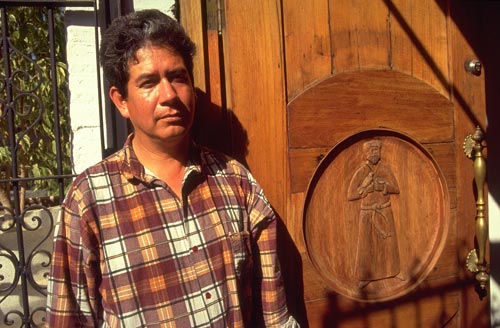
Ramon Nicholas Figueroa Castro with one of his carved doors, Alamos, Sonora, Mexico.  Photo by Anders Tomlinson.

To have a wood door built and carved by Ramon Figueroa was a big deal.

Ramon Nicholas Figueroa Castro was one of the most respected artists-craftsmen in Alamos. Members of the North American community spoke of him in hushed tones reserved for masters and maestros. Any visitor that asked about local creative talent would learn about Ramon and his growing reputation outside of Alamos. Many locals recognized a Ramon carved door as a collectable piece of art, hard to come by for a variety of reasons: he works slow, he is busy with a growing client waiting list, needed materials were hard to find, he is expensive because of his rising profile and, or… If one managed to purchase a Ramon it became the opening to countless conversations.

The Ramon I met was quiet spoken with a soft smile and simple gestures. It seemed he did what he did because it was what he did, there was a simplicity to his movement. Everything else surrounding his work was what other people did because it was what they did. Ramon hoped they would pay him what they had agreed to pay him and he would be left to his work, after-all, it is what he does.

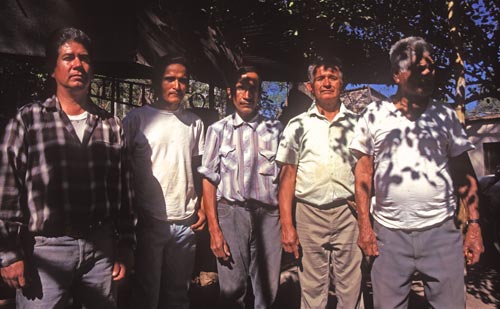
Figueroa brothers, master wood workers, Alamos, Sonora, Mexico.  Photo by Anders Tomlinson.

Ramon together with his wood working brothers at their shop.

The brothers Figueroa all worked with wood on their family property on Calle de las Delicias.
Manuel, Emir Yonolan, Wilson, Paul, David and Ramon, not in the other of the above photo, shared a sprawling work space both open air and under roof. There were few walls: nature came in and their wood creations went out. Trees provided shade for craftsmen making tables, chairs, windows, doors… On this day Ramon was finishing a beautiful bureau. Its elegant turnings and graceful details stood out in sharp contrast to the dirt floor.

Ramon Figueroa with his work.    Photo by Humberto Enríquez

Ramon Figueroa with his work. Photo by Humberto Enríquez

Humberto Enríquez sent this photo of Ramon Fiqueroa. Ramon stands proud amongst his tools, materials and hand crafted objects. Is he finding comfort in his skills and artistry? Could it be that part of Ramon’s journey was his last work would be one of his best works?
This is a path many artists follow.

©2014 Alamos-Sonora-Mexico, all rights reserved by respective photographers.

Church Bells

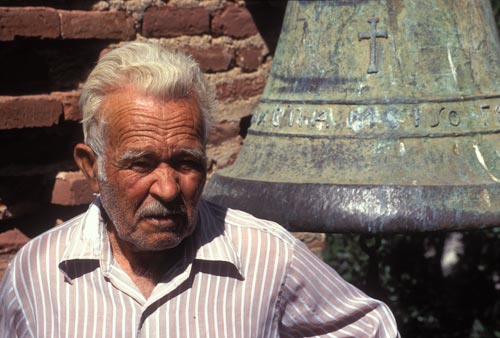
64… Two churches, two bells, two men and two towns…

tino, caretaker of the church, Alamos, Sonora, Mexico.  Photo by Anders Tomlinson

Tino and his beloved Bishop Reyes Cathedral face another sunset.

I knew this would be an interesting photograph. A man, who, in his face, had seen much of what life has to offer, a church bell framed by its belfry and a natural backdrop stretching from Mirador to Sierra Madres. All were lit by a low brillant sun whose golden rays were diffused by humid shimmering heat waves. We only had a moment to take this photo, as we were speaking he was summoned to fix a pressing property emergency, this is what maestro Tino did. I asked him to look towards the sun and pressed the shutter button. One click and done, another moment saved for the future, this is what Anders does.

Caretaker and bell at Aduana church, near Alamos, Sonora, Mexico. Photo by Anders Tomlinson

Caretaker of Nuestra Senora de Balvanere Church in nearby Aduana.

La Aduana on a midweek day in late Spring is peaceful. Take away the sounds of birds, insects, burros, dogs and a handful of kids and it is really quiet. Few cars will be heard for hours.
This is a place where the past lingers on, mining sites and ruins litter hillsides, a lonely plaza’s dry fountain surrounded by buildings once busy including a store where customers’ shoes for hundreds of year have cut a groove into the floor. I visit the small church and met the caretaker who takes me on the roof so I can see the town from where the bells of Nuestra Senora de Balvanere are. The church has an interesting story involving a beautiful maiden, Indians and some rocks, but that is for a coming journal entry. It is hard to imagine what it is like when
thousands of pilgrims arrive in La Aduana, many walking along arroyos from Alamos, to honor the Virgin of Balvanere every November 21st. A breeze kicks up dust on an empty road, a crow calls, three boys in a dry creek bed laugh and the day moves on. Life in Aduana 1996 is much different than life in Aduana 1700, one can only wonder what it will be like in Aduana 2020.

two church bells at bishop reyes cathedral, Alamos, Sonora, Mexico.  Photos Gary Ruble and Anders Tomlinson.

A tale of two bells, one old, one new, and how they toll.

The bells of Bishop Reyes Cathedral are part of Alamos’ daily fabric, they are a prominent voice in a complex orchestral sonic landscape. Here are old and new: a cracked bell was replaced by a shinny bell. I was raised to believe if you don’t have something good to say about something don’t say anything. This is a good rule of thumb, especially in small rural communities. There are always exceptions: this new bell didn’t make me feel good. It wasn’t inviting me, its clang was more of a warning. It is possible that the bell vibrates discordantly only to me, but I find this hard to believe, I have a good ear. Maybe it was the bell ringer’s technique. 14 years have passed, maybe it has mellowed with age. I hope so. A town so culturally rich should have a bell that touches the heart and inspires the imagination. Maybe it does now.

This marker celebrates the birthplace of Dr. Alfonso Ortiz Tirado, Alamos, Sonora, Mexico.  Photo by Anders Tomlinson.

Dr. Ortiz Tirado is another Alamos native that touched the world.

Dr. Ortiz Tirado was born in Alamos and spent his early tears in Culican, Sinola before moving with his newly widowed mother and family to Mexico City. He became a successful doctor specializing in plastic surgery and was Frida Kahlo’s bedside doctor. He made vast contibutions to the medical world. And he could sing. His beautiful tenor entertained audiences across continents. Alamos hosts a grand music festival in his honor, The Festival International Dr. Arturo Ortiz Tirado, that includes dance, art and music with workshops, lectures and concerts. The festival entertainment, centered in Alamos, also performs across Sonora visiting venues in Nogales, Hermosillo, Ciudad Obregon, Hutabampo and Navojoa.
The ten day event is held each year in late January.

To see more Alamos Journal pages.

To return Home.

©2012 Anders Tomlinson, all rights reserved.

Pemex

68… At the Alameda’s western edge is the gas station…

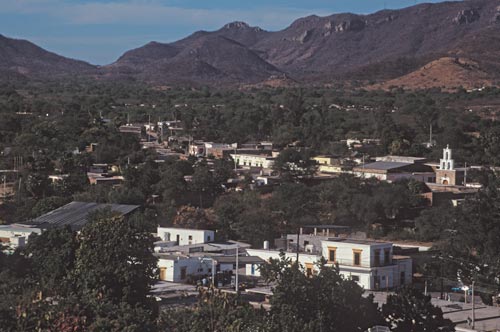
Looking northwest from The jail on Guadalupe Hill, Alamos, Sonora, Mexico.  Photo by Anders Tomlinson.

A summer view looking northwest from the old jail on Guadalupe Hill.

Three busy centers of Alamos can be seen above: the gas station is at the photo’s bottom left, just to the left of the two story building. The Asoc. Ganadera local de Alamos is seen to the left of the gas station with its large angled metal roof that is behind and part of the local cattlemen and ranchers association’s office. The roof’s design acts like a speaker broadcasting music from dances held here across town and off the mountains. In the middle near the right edge is La Capilla Zapopan. Chapel Zapopan was built in 1841 for Dona Juana Mallen by Don Ignacio Almada y Alvarado.

pemex gas station in the alemeda, alamos, sonora, mexico 1995.  photo by anders tomlinson.

One approaches the busy Alameda as the highway from the west ends.

The nature of my documentary efforts is capturing an area’s geography and events during a certain time period. There has been numerous times while I edited history films that I wished someone had taken a picture that benchmarked a landscape in a specific era. My photos will, hopefully, be accessible to future film makers as they look back and interpret the past. The body of my work is not commercial photography: these images were not made for someone or something. They are part and parcel of a time-capsule-database-puzzle driven by my quizzical eye. This Journal you are now reading is my attempt to make it less a puzzle by providing information about the photos and the context that they were produced in. As example, Alamos’ population has nearly doubled since I last visited and I am sure that many of these scenes have changed just as I am sure that many remain the same. I have heard for years that the jail on this hill would become a cultural center, a wonderful idea for a substantial structure with million dollar views right in the middle of town. The question becomes, is this same vantage point in 2011 a view from a cultural center or is it a photo from the old jail? All I know is this is what it looked like in 1996 and behind me was a jail with armed guards wanting me to buy inmate handcrafted horsehair products.

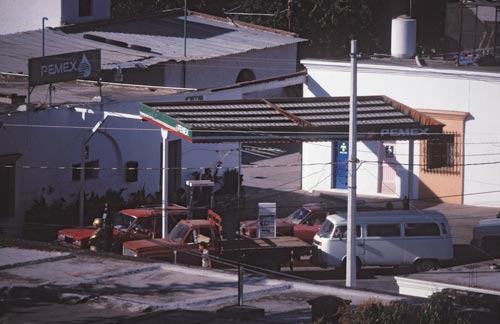
Looking down into gas station, Alamos, Sonora, Mexico.  Photo by Anders Tomlinson.

The only gas station in town is part of a Federal monopoly.

On March 18, 1938 the Mexican government nationalized foreign oil companies operating in Mexico. This was the birth of Petroleos Mexicanos, Pemex. Today it is the second largest state owned country in the world as well as the second largest company in Latin America. Pemex has 138,000 employees and pays taxes that cover 40% of the federal government budget. The Mexican petroleum industry has come a long way from Tampico in 1876 when oil was first successfully refined into kerosene. Modern Mexico and Pemex, with assets worth USD $416 billion, are tied at the billfold.

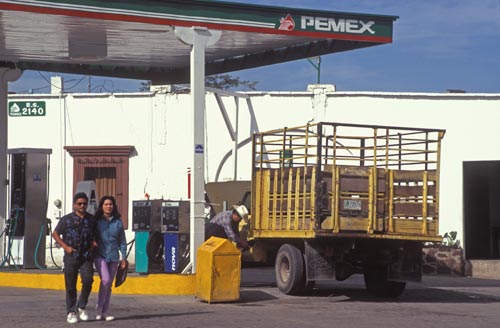
Pemex gas station, Alamos, Sonora, Mexico.  Photo by Anders Tomlinson.

Need gas? Need air? Need directions. Here is a good place to go.

If one was to spend a day watching the comings and goings at the gas station they would learn much about what makes Alamos go. People pull in for gas and air all day long: on foot with gas cans, bicycles, motorcycles, cars, trucks, big trucks and buses. Conversations take place between customers, attendants, people passing by and folks hanging out. Locals, tourists, ranchers from out back, North American community members, employers, workers, poor and rich all show up if they need gas here and now. Waiting in line can be a social event.

Late afternoon in the Alameda near the gas station, Alamos, Sonora, Mexico.  Photo by Anders Tomlinson.

Another day is coming to an end, a time of reflection and preparation.

These kids are sitting across the street from the gas station. What are they thinking? And where are they today? Did they they know of Carlos Slim Helu? Currently, Carlos Slim Helu is thought to the wealthiest man on planet earth. His father, Julian, emigrated to Mexico from Lebanon at the age of 14 in 1902. Julian began his business career, and long lasting family fortune, with a dry goods store and Mexico City commercial real estate investments. Today, Carlos is chairman and CEO of Telemex and America Movil. His conglomerate Grupo Carso SAB has extensive holdings in other Mexican Companies. All together, his corporate holdings in 2011 are thought to be worth USD $74 billion.

Soon it will be time for these kids to say goodbye to each other and return to their families for dinner. The future of Mexico is tied to Pemex, the likes of Carlos Slim Helu, these kids and the kids who are now sitting in this very same place. I wonder what the kids of today are thinking?

gas station, pemex, alamos, sonora, mexico, 1993.  photo by anders tomlinson

No customer with cash, or good credit, is too small or too big.

This is a busy place in a noisy neighborhood. It is a junction that keeps Alamos, Sonora, Mexico functioning in the modern internal combustion era. In reality, not ever one in Alamos owns a car. In fact, most do not own a car and if they need to travel they walk, ride bikes, motor scooters, an occasional horse, taxis or buses. Life without a car is a slower life. Some would say it is the way to live life come sunrise, come sunset.

To see more Alamos Journal pages.

To return Home.

©2013 Anders Tomlinson, all rights reserved.

Creativity and Smiles

33 … Another day doing what they do, talking about a nice work environment.

two police women, Alamos, Sonora, Mexico.  Photo by Anders Tomlinson

There are times Plaza de las Armas needs traffic directors, here are two.

The year is 1992, Lupita Dominguez and Clara Miranda Meza are Alamos traffic police women. On weekends and holidays their beat was the Plaza and their job was keeping traffic moving and trouble away. They could also be seen at most special events around town, anything that created traffic situations. They performed other police functions as needed. These were the days when social etiquette frowned on women wearing shorts in public. By my return shoot in 1996, women were wearing shorts everywhere. Times change, fashion changes, the Plaza remains the same.

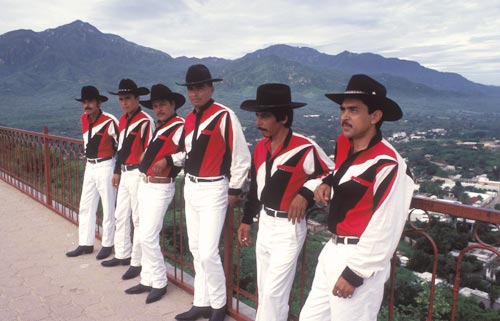
Halcon de la Sierra Alamos, music group, Alamos, Sonora, Mexico.  Photo by Anders Tomlinson.

Music group Halcon de Sierra Alamos pose with their namesake behind them. m.

1996, Halcon was led by sax player Manuel Dominquez. He was the father to Luis, keyboards and sax, and Roberto who played a mean bass. Their family home was the old cine in town. One of their sisters was Lupita, the police woman. You can tell the Dominquez family by their million dollar smiles. Seen here, left to right, are Manuel, Luis, Javier Claussen Ramierz – guitar, Roberto, Pedro Tomas Hurtado Valenzuela – drums, and their vocalist Hector Gastelumn Garcia. I went to see them play at a local dance, interesting music to say the least. They played their own intricate compositions that incorporated elements from jazz, funk, rock, middle east, european, mexican pop and traditional music. Most importantly, the packed hall stayed on their feet all night long dancing, viva musica!

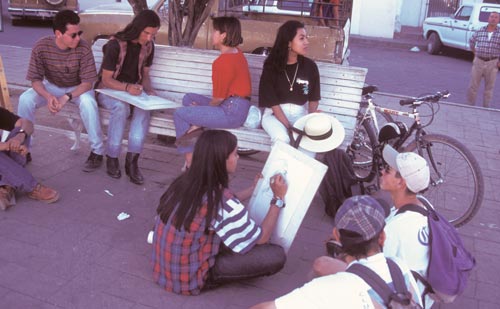
young artists sketch on the plaza, Alamos, Sonora, Mexico.  Photo by Anders Tomlinson.

Talented young artists demonstrate their skills in the Plaza.

Alamos is a major mexican tourist destination in the summer. Buses come in from all over the region. The museum is busy with visitors. The plaza is activate with events. These young artists from Navajoa, 34 miles to the west, had giving an art demonstration in the museum and came outside to sketch in the plaza. They drew not only young women of Alamos but a crowd, viva arte!

closeup of a sketch, Alamos, Sonora, Mexico.  Photo by Anders Tomlinson.

The ability to see and capture a moment is a human thing, a human need.

The young woman pictured here worked in the Alameda. I would often see her outside an office on the south sidewalk. I hope this Daily Journal project helps me find names for these faces. Here is a proud profile from Alamos, Sonora, Mexico, 1996.

wood artist setting up art, Alamos, Sonora, Mexico.  Photo by anders Tomlinson.

Every morning in the summer he would reset his art display in the Plaza.

Julio Horoyoqui Ontiveros displayed his work outside Hotel Los Portales in the Plaza. Every summer morning he was there unpacking his wooden sculptures and displaying them for sale. Others would gather around him and read morning newspapers and comment on world affairs. They knew I was a San Diego Padre fan and kept me informed on a tight 1996 pennant race between my Padres and the Los Angeles Dodgers. Baseball is big in Sonora, birthplace of legendary Fernando Valenzuela. The Padres won on the last day. What would de Anza think of these Californias today?

To see more Alamos Journal pages.

To return Home.

©2013 Anders Tomlinson, all rights reserved.

Victor’s Cistern

84… Making a cistern, talking fresh water and coming full circle…

Victor oversees construction of a cistern, Alamos, Sonora, Mexico.  Photograph by Anders Tomlinson.

Victor takes a deep look into his newest construction project, a cistern.

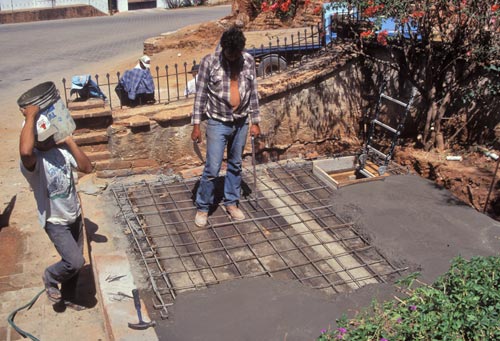
Cisterns, the collection and holding of rain water using lined waterproof storage devices, began sometime in the Middle and Late Bronze Age, 2200 -1200 B.C. Our first record of lime plaster lined cisterns was in what is now Lebanon, Syria, Jordan, Israel and Palestinian territories. In 850 B.C. King Mesha of Moab recorded in the famous ‘Moabite Stone”, “so I said to all the people, make your every man a cistern in his house.” Cistern comes from the latin for “box”. In the 1900’s rain collecting cisterns were common in new house construction across the USA. Victor, seen above overseeing digging, was owner of a flat-bed truck and Black Power, a black pickup truck with a powerful engine.

Digging a hole for a cistern, Alamos, Sonora, Mexico.  Photo by Anders Tomlinson.

Other than Victor's truck everything on this project is done with human muscle.

Victor was proud of this project. He saw it as the wave of the future and a wonderful opportunity for new work to keep his crew employed. I enjoyed my time with Victor, his deep voice and easy laugh gave a hard working man an easy going disposition. Not too far back in time rain water was considered, rightly so, a resource to be gathered and saved. 2.5% of earth’s water is fresh water and 68.6% is captured in glaciers and ice caps and the balance is stored as ground water. 73.1 % of fresh surface water can be in found ice and snow, 20.1% in lakes, 3.52% in soil moisture, 2.53% in swamps & marshes and 0.46% in rivers. However one looks at fresh water it is a rare commodity that is needed by a growing human population. There is the same amount of fresh water to take care of the soon to be seven billion people as there was for as few as 1,000 human breeding pairs surviving the eruption of Lake Toba’s super-volcano 69,000 to 77,000 years ago. Fresh water volumes are a planetary constant. Cisterns capturing rain water are a natural tool to help sustain human life. Yes, Victor was proud of this project.

Finishing off the cistern's brick walls, Alamos, Sonora, Mexico.  Photo by Anders Tomlinson.

The hole is dug, the bricks are set and finishing work begins.

The maestro on this project was well respected and hired by Victor because of his experience with cisterns. This cistern was not designed to capture rainwater. Its purpose was to store city water to draw from when there were problems with municipal water deliveries. During my stays in Alamos it was not unusual to have access to city water for only a couple of hours a day and on isolated occasions no water was available. As Victor’s crew worked hard to finish this project I heard of other folks considering building cisterns. This was music to Victor’s ears.

The roof goes onto the cistern, Alamos, Sonora, Mexico.  Photograph by Anders Tomlinson.

The cistern's roof is nearing completion under the maestro's watchful eye.

The maestro had a lazy eye and I couldn’t figure out where exactly he was looking. When I watched him in town he struck me as on odd bird. The maestro liked to drink, and the more he drank the louder he became. I learned on my next trip back to Alamos that this project did not have a happy ending. I was told that Victor and the property owner had a falling out and they were going to court to settle the dispute.

Today nearly every home in North America has a cistern, be it a small cistern, the toilet tank storing water for the next flush. It may be time to consider each new home having a cistern system to capture roof rainwater. We face a constant reality – 99% of the water on our planet is unusable for man to freely drink or irrigate with, and of the remaining one percent: 99% is groundwater, .86% is from lakes and .02% from rivers. The sustainer of terrestrial life, fresh water, is in limited quantities. A good rule of thumb is grab fresh water when you can, and when you have it, value it and use wisely.

To see more Alamos Journal pages.

To return Home.

©2013 Anders Tomlinson, all rights reserved.

Roof Repairs

39 … Workers on the roofs, a common sight for those looking down …

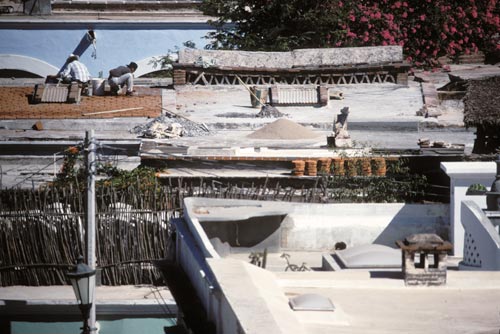
Workers repairing roofs, Alamos, Sonora, Mexico.  Photo by Anders Tomlinson.

Above a ceiling there is hopefully a working protective roof.

1750 was a hard year for Alamos with 6,000 people dying from the plague. King Charles III of Spain responded to the disaster by sending Inspector General of the Interior Don Jose Rodriques Gallardo who reported that Alamos has no jail, Municipal buildings or squares. Orders were given to layout streets, align houses and build a jail. A new Alamos street-grid was designed with houses that had adjoining walls to keep squatters out of Centro Alamos. The result is what exists today, Andalucian architecture built by imported maestros from Southern Spain. The mansions’ floor plans, patterned after Roman homes, were either square, U or L shaped surrounding walled courtyards. Then is now.

Worker painting roof in Alamos, Sonora, Mexico.  Photo by Anders Tomlinson.

From a distance this could easily pass as modern art.

To have a roof one needs walls. Alamos walls started with four feet of rock and rubble. On top of the “foundation” adobe bricks stacked up to reach fifteen feet high and were two to three feet in thickness. Much of the hard labor was done by Mayo Indians. The wide walls would insulate the interiors and help support the coming roof along with plaster covered columns made of stone or fired brick.

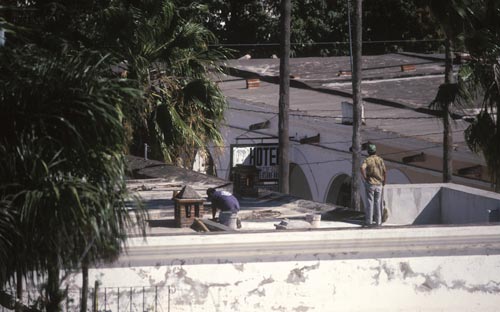
Workers on roof, Alamos, Sonora, Mexico.  Photo by Anders Tomlinson.

Roofs can be nice places, in good weather, to work with their views and privacy,

In an coming journal entry we will look at how roofs were made by examining ruins and restorations. Flat roofs do not work that well in Southern Sonora when heavy rains that can not be removed fast enough. It becomes a ever-present vigil to spot leaks before they cause damage to the permanent structure. It is a dance brought on by squalls and summer torrential downpours. It is also wise to watch where one is walking on old roofs, since footsteps can create new leaks. And so it is…

To see more Alamos Journal pages.

To return Home.

©2013 Anders Tomlinson, all rights reserved.

Casa de los Santos

32 … Christmas on the road came home at Casa de los Santos

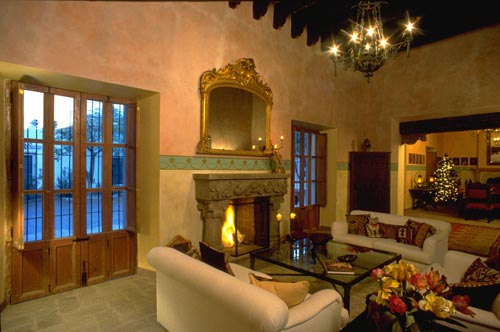
Living room at Casa de los Santos, 1992, Alamos, Sonora, Mexico.  Photo by Gary Ruble.

A quiet moment in a beautiful space, the workers are gone for the holidays.

Years of neglect during the 20th century chipped away at Calle Molina #8, yet another grand Almada family mansion turned to ruin. Jim and Nancy Swickard purchased what was left standing in 1988, a central section minus two wings that once surrounded the courtyard on three sides. A four year renovation effort commenced with as many as twenty workers on site at any given time. When we arrived in 1992 the project was nearly finished, a new spirit had taken up residence in Álamos, Sonora, Mexico. Our photographic crew of five, led by internationally renown Gary Ruble, prepared to light the living room, kitchen, interior portales and pool area. Casa de los Santos was ours for a couple of hours.

Kitchen at Casa de los Santos, 1992, Alamos, Sonora, Mexico.  Photo Gary Ruble.

A maestro was brought in to create a dramatic domed brick kitchen ceiling.

Kitchens are the engine rooms of Álamos. Here, is where living starts anew each day. Here, is physical and social sustenance. What struck me about Casa de los Santos was its majestic scale anchored by reverent detail. There was much to see but nothing was crowded, everything had its special place, space flowed from here to there as the interior decorating became a pilgrimage in and of itself.

Interior portales at Casa de los Santos, Alamos, Sonora, Mexico. Photo by gary Ruble.

The inside portal, and climate, provides an inside – outside way of life.

The interior portals are an Álamos way of life. Arches support roofs without exterior walls and protect residents and casa from the elements. Here, under shade, gardens, views and furnishings come together providing living and dining areas. Imagine sitting here, outside the wall are the muffled sounds of town, a dog barks, children play… Inside, bird sings and wings flutter, breezes come and go, water features provide soothing sound, music and guest voices travel across the courtyard. This is now and then, Álamos, Sonora, Mexico.

Pool area at Casa de los Santos, 1992, Alamos, Sonora, Mexico. Photo by Gary Ruble.

It is still, a winter squall has passed. Breathe deep, relax.

Our crew was staying at Puerta Roja Inn on Calle Galeana and Casa Nuzum on Calle Comercio. Though we were separated by only a short walk, mere minutes, we were worlds apart. And this another aspect of Álamos, behind each front door is a social universe unto itself. And it is easy to become lost in the moment and swept away by chance meetings and impromptu invitations. I, as director – producer, was starting to lose control of our efforts. The photo shoot at Casa de los Santos was the first time in days we were all together and on the same page. This moment was my Christmas, we were doing what we came to do. December 1992, Casa de los Santos, and our team in action, priceless.

Hacienda de los Santos 2015 Update

Everyday is history, here the Hacienda's main pool lives on.

Everyday is history, here the Hacienda’s main pool lives on. Photo: Amy Haskell

Casa de los Santos has grown over the years, expanding into other colonial mansions
all interconnected by walkways and maturing gardens.

casa de los santos, alamos, sonora mexico. the largest fountain which was originally the sugar mill's 'Mill'.  It had oxen and a stone wheel to crush the sugar cane.  The operation went into bankruptcy in 1710 and we are the second owner's of record.

Listen closely and one may hear the past come alive. Photo: Amy Haskell

“The Hacienda goes back into a construction mode in July, 2015 with some remodeling work on the sugar mill property to create a true, and long awaited, gift shop adjacent to the Cafe Agave. A new Spa will be ready to open in the Fall and the present spa. We hope to have three totally new Master Suites for next season, plus two inner connecting Hacienda Guest Rooms for families. Our total room and suite count will be 32 for next season. We will have some exciting news this summer about some international recognition for Hacienda de los Santos…” Jim Swickard

To see it as it is today visit Hacienda de los Santos Resort and Spa.

For more 2015 summer updates visit Jim Swickard notes

To see more Álamos Journal pages.

To return Home.

©2013 Anders Tomlinson, all rights reserved.

Rooftop Gardens

78… A rooftop that lives and breath all things Alamos…

Nuzum roof top garden across the street ffom Bishop Reyes Catheral, Alamos, Sonora, Mexico.  Photo by Anders Tomlinson.

Elizabeth Nuzum's garden across the street from Bishop Reyes Cathedral.

Here, in the shadow of cathedral bells and angelic choirs was a multi-purpose rooftop garden. A narrow wrought iron caracol, snail, spiral staircase led one up from a back patio with a small pool to an expansive array of raised planter boxes. Elizabeth Nuzum enjoyed people, her home, her gardens and life in Alamos. For many, her husband Pember and Elizabeth were Alamos greeters, welcoming visitors inside the old wood doors on Calle Comercio. Elizabeth designed and managed her gardens while Pember kept an eye on the household finances.

Flowers and Sierra de Alamos from Nuzum's roof garden, Alamos, Sonora, Mexico.  Photo by Anders Tomlinson.

20 feet above the street one can hold a conversation with passing clouds.

The roof top garden and its 360 degree views was a special place. The sky at night, with stars there to be touched while one laid back on a substantial Sonoran cot, was a connection to all things in all places. Rooftop eavesdropping on the comings and goings along Calle Comercio and Calle Guadaloupe Victoria tuned one in with the heartbeats of Alamos: Bishop Reyes Cathedral, Palacio, Plaza de Las Armas, Mercado, all points of the compass and all events past and present.

Nuzum roof top garden looking east at Mirador, Alamos, Sonora, Mexico.  Photo by Anders Tomlinson.

Mirador voices, at times, arrived here with a favorable wind.

Let me count the sounds I heard up on the roof: uniformed school kids walking in groups, talking, laughing, singing, stepping off rhythms, kicking balls, kids being all things kids. Occasional horse hoofs echoing on cobblestone streets. Music from rattling car and truck radios ricocheting off narrow streets. Surround sound bird songs and calls punctuated by barking dogs, working hammer and saws and distant braying burros. All combinations of people passing by: one, two, or three generations together talking, workers, errand runners, neighbors en-route to visit neighbors or hang out in the Plaza, shop at the Alameda and Mercado or attend to business at the Palacio or… This garden overlooked the center of Centro Alamos’ rainbow of expression: joy, surprise, acceptance, expectations, anger, yearning, anticipation. greetings, farewells…

Christina Vega on Nuzum's roof garden, Alamos, Sonora, Mexico. Photo by Anders Tomlinson.

A young girl picks flowers on the roof, a simple moment, a simple smile.

Christina Vega, daughter of Chacho and Cammie, sister of Gaspar, walked in all worlds Alamos. Her Mexican blood was Chaco’s large family and her American blood was Cammie’s parents Elizabeth and Pember and brother Kit who came to visit from his world travels. Cammie and Chacho lived modestly on Calle Ninos Heroes, a short walk from the grand roof top garden on the the other side of Guadaloupe Hill.

Christina Vega and church from Nuzum roof, alamos, Sonora, Mexico.  Photo by Anders Tomlinson.

What does Christina see, and hear, on this spring day in 1984?

The roof’s northwest corner, with a view into the Plaza and Gazebo, was across the street from the bank. At opening time a line of people would be waiting sharing conversation. Daily masses brought people to the church’s eastern door. Funerals processions would leave the church and passed by as they headed east to the Panteon – Cemetery. Police headquarters, at times busy, were three houses to the east on Calle Comercio. Tourists speaking English, French, German and other languages would stop and chat as they headed to and from surrounding lodging. At night, one could listen to quitar playing coming from Polos restaurant’s kitchen as well as the Estudiantina practicing at the Museum. At this moment Christina is listening to the public serenade that is Alamos.

Pember told Anders, “always call us Alamos, Sonora, Mexico.” And Anders has.
Pember and Elizabeth Nuzum were a major part of the North American Community for decades. Their casa next to the Church on Calle Comercio #2 greeted many many who visited Alamos, including Anders. It is not uncommon to have rain squalls in December. And it was common to hear Pember playing his theater organ in the Nuzum music room. Those days are gone. But the spirit lingers, it always does.

To see more Alamos Journal pages.

To return Home.

©2013 Anders Tomlinson, all rights reserved.

Nigthtime Power

30 … Imaginations soar with night when all one can see is lit by man or moon…

Governor's Mansion ruin at night, Alamos, Sonora, Mexico.  Photo by Anders Tomlinson.

Light and shadow, substance and form, history and echos, spirits and ghosts.

In the night, things from the past bump into modern moments. As example, aged columns, scarred by events that rushed through time, are illuminated by electricity. As example, Sonora and Sinoloa were merged into a new state of Occidente and in November 1827 Alamos was declared its capital. On January 10, 1828, Governor Jose Maria Gaxiola moved into his official residence behind the walls seen above. Here, decisions were made that shaped those days, life was lived to match royalty in Spain and the mines to the west were in full production and… You are here…

Calle Comercio at night, Alamos, Sonora, Mexico.  Photo by Anders Tomlinson.

Calle Comercio on a summer midnight, 1996. Even spirits must sleep.

If that police pickup truck, parked across the street from the Police station, wasn’t there then where could we be, and when? The answer is Alamos, Sonora, Mexico circa both 1800 and 2011. This is a portrait of power. At the western end, the cobblestones leads one up the steps and into the Cathedral’s side doors. Down the block to the east, the Governor and Bishop mansions were, and are, across the street from one another. Thousands of miles to the east is Spain, thousands of miles to the west is China and at one time they were both here, and today their DNA marches on.

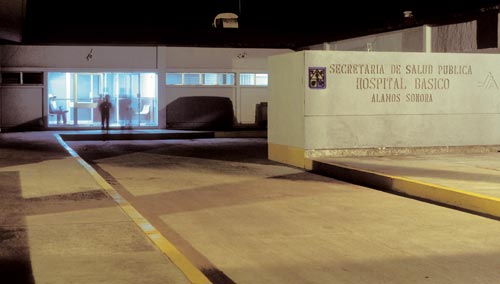
The hospital in Alamos, Sonora, Mexico.  Photo by Anders Tomlinson.

There is no mistaking this for the past. Modern lines, modern times.

On the way into Alamos Centro a regional – basic care hospital is setback on the right. At night, this scene could be an emergency room anywhere in the world. I had need to visit after one long difficult day into night. The doctors were here in Alamos for one year’s mandatory service, a bridge between medical school and where they would go to make their livings. That night, my doctor came from outside Guadalajara and hoped he would be going to Tijuana, to be on the frontier of modern Mexico. I was impressed by how he looked me in the eyes, how he touched and probed, and by the questions he asked and how he listened and responded to my answers. He was in the moment, and the moment was all about bringing me comfort. It was not about profit or loss. It was about me.

X-rays were needed to evaluate what was happening in my chest. Alas, their x-ray machine was down for repairs. He gave me a shot to reduce my discomfort and asked me to bring him back chest x-rays. He had done all he could do. The morning began meeting the Police chief in his office, at his request, and ended up on a midnight taxi cab ride to Navajoa in search of x-rays. And this day will be another of the twelve Alamos short stories I am preparing to write.

Tis the Season of Love and Jackets.
Christmas in the Plaza de Las Armas is a time of of sharing and joy. Food, fireworks and the town coming out to be seen and see is what community is all about.

It is In The Night That the Past Dances Down Narrow Streets
Oh little town of Alamos. Lights sparkle in the evening darkness. Pungent smells float with the shifting breeze. Music, live and recorded, rises up from the homes and neighborhoods. Birds sing under star filled skies. Dogs bark and cars pass by. Footsteps on cobblestone and smoke from fireplaces create mystic moments. Children of all ages play late into the night on the quiet streets.

Night time is not threatening, it is a celebration of another day both coming and going. Night time is magical. The town seems smaller. The world becomes all you can see looking down a street. It is easy to focus on the smallest thing. And behind the walls there are other worlds: private legacies, conversations., comforts, learnings, entertainments, deliberations, dreams.
 Photos and editing by Anders Tomlinson. Music from “Camino Songs” by SonicAtomics.

The Place to Be and Be Seen
It is a wonderful feeling to sit with a friend in the plaza on a pleasant evening. Here, one can watch people come, be and go. This is the a place to be seen and see. When all have come and gone it becomes a romantic refuge for a young couple.


Imagine horse drawn carriages, burro pack trains, and cars that have come into Alamos along these streets. Imagine the families that have been here for centuries. Imagine the change of government, some peaceful some violent. It is all here in the shadows of night. Photos and editing by Anders Tomlinson.
Music from “Camino Songs” by SonicAtomics.

To see more Alamos Journal pages.

To return Home.

©2013 Anders Tomlinson, all rights reserved.

History Medallions

36- A walk through modern history at Escuela Paulito Verjan …

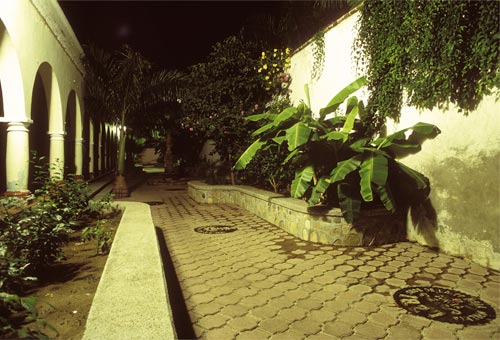
History walk at Escuela Paulito Verjan, Alamos, Sonora, Mexico.  Photo by Anders Tomlinson.

The air is sweet with blossoms, night birds call, and ghosts walk.

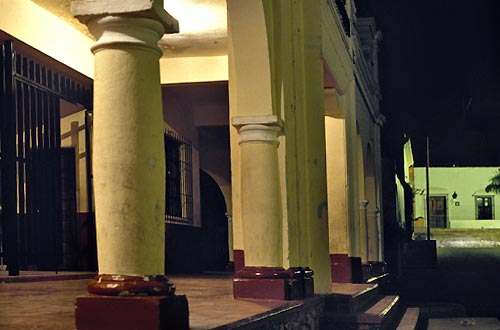
TThe streets are empty. I will not see another person on this walk from
Calle Comercio to Escuela Paulito Verjan, a middle school and back,
but, I am not alone. I am with everyone that have traveled these
pathways throughout the years at night. My shoes land in their footprints.
There is rustling in flowering vines still wet from a summer rain.

Histoty walk Escuela Paulito Verjan, Alamos, Sonora, mexico. Photo by Anders Tomlinson.

Shadows are small as the sun nears its zenith. Medallions speak of other zeniths.

How many times as this man took this path to Álamos Centro? How many times has
he stopped to read a history medallion? How many times has he appreciated where
he is? How many times has he felt grateful this is where his family is? Some of
his grand children, at this moment, may be behind the school’s portales studying.

1684 history medallion, Escuela Paulito Verjan, Alamos, Sonora, Mexico.  Photo by Anders Tomlinson.

Álamos is now an official city as Spanish colonization continues north and west.

1684, sixteen-eighty-four, and Álamos is part of the new frontier. Thinking back
makes me wonder about the future. 2084, twenty- eighty-four, and what will one
see standing in this very spot? And, 2184, twentyone-eighty-four? and… Whoa!
Time to take a couple of deep breathes and enjoy being in the present.

A new catheral rises from the grounds of the town’s first small adobe church.


Construction began in 1786 on Bishop Reyes Cathedral also known as now
known as Parroquiade La Purísima Concepción. Official records indicate
that work on the church began in 1786. Álamos elected three town folk
to supervise work and manage the budget. The church was finished in 1803.
Ladies from the wealthy homes of Álamos were asked to contribute one
of their fine china to decorate the nearly completed cathedral

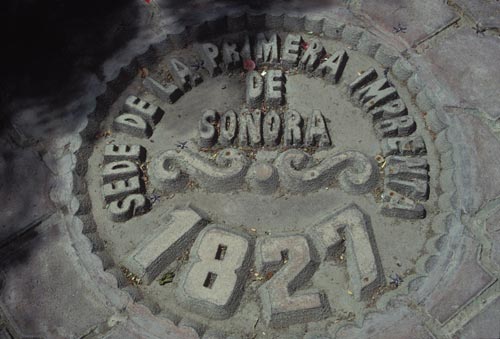
first printing press in sonora, Alamos, Sonora, Mexico.  photo by Anders Tomlinson.

Civilizations mature and expand with the introduction of printing presses.

History is the record of events occurring and needs being fulfilled.
It is easy to ask what came first. The answer, or better yet answers,
are part of a grand multiple causation continuum and are not that
easy to formulate. But we try, that is part of being human.

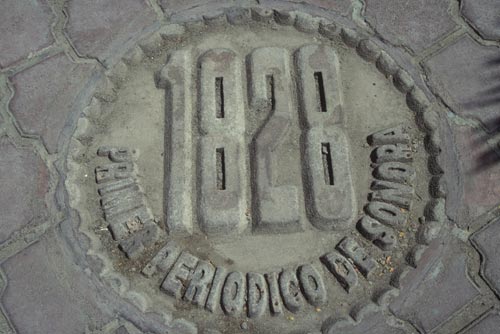
history medallion for first publication in Sonora, Alamos, Sonora, Mexico.  Photo by Anders Tomlinson.

Being the first in Sonora meant being the first in the Californias.

This is another milestone in the development of Sonora and all
of western settlement. Here, it is easy to answer what came first.
First, there was a printing press and then there was a newspaper.
A short walk from Escuela Paulito Verjan are operational 100 year
old presses in a family run printing shop. It is the human way.
Álamos, Sonora, México has a long and literate history.

Álamos had become an important capital city on the frontier.

Here, at the foot of the Sierra de Álamos and at the end of
Calle Comercio decisions were being made that impacted many people
in the newly combined Sinoloa and Sonora – the state of Occidente.
Construction began in 1928 on Governor Jose Maria Gaxiola’s
new home and official residence on Calle Comerico.

The mint is opened for big business.

Making money with the silver coming from Aduana, seven miles to the
west, added to Álamos power and prestige. The first mint in Alamos was
established by D. Leonardo Santoyo, with a concession or grant, obtained
from the federal government,permitting him to coin only copper coins.  
Coinage was produced only in 1828 and 1829 since the copper coins were
not accepted by the people. 

Ramón Corral, publisher, writer, and government official.

Ramón Corral was born outside of Álamos January 10, 1854 on
Hacienda Las Mercedes where his father worked. He first gained
attention in 1872. For political reasons he founded the
newspapers El Fantasma (The phantom) and La Voz de Álamos 
(The voice of Álamos). In 1887 Corral was the General Secretary
of the Government of Sonora and interviewed the captured
Yaqui military leader Cajemé. Corral published biographical
notes about Cajemé In La Constitución (Periódico oficial del
gobierno del estado libre y soberano de Sonora),

A deadly day on Guadalupe Hill between the Plaza and Alameda.

September 22 – General Antonio Rosales, with less than 500 troops,
leaves El Fuerte to recapture Álamos from the French Imperialists.
Rosales forces met Colonel Almada’s larger force in a three hour
battle on Guadalupe Hill. Rosales and many of his men, possibly a
third, were killed. Rosales was buried in the Álamos cemetery.
His body was later moved to Mexico City.

1866 – Sonora is restored to the Republic.

On January 7, 1886 General Angel Martinez successfully attacked
Colonel Jose Maria Tranquilino Almada’s led Imperialists on
the edge of Álamos into the Plaza. Álamos was plundered and the
Church’s meltable precious metals were stripped away. Almada attacked
Minas Nueva in on the last day of May and for a couple of weeks
regained Alamos. He was forced to give up the city on August 28.
The French garrison in Guaymas was abandoned after several defeats
in central Sonora. Sonora rejoined the Republic in September, 1886.

Álvaro Obregón Salido: General, elected President of México twice.


Obregón, born February 19, 1880, was a general in the Méxican Revolution
and was elected President in 1920 to 1924. He presidency was relatively
stable marked with eductaion reform and labor laws benefiting workers.
He was elected President again in 1928 but was assassinated
before he could start his term.

1889 – Another great person is born in Álamos.

Professor Othón Almada is one of many people born in Álamos who rose to
either regional, national or international recognition and influence.
Othón Alamada became Secretary of Public Education in the State of
Sonora. Many schools in Sonora are named after him. Today in the
Álamos school system there are many who may take leadership roles
in the future of Sonora, México or possibly the world.

Alfonzo Ortiz Tirado: doctor, opera singer, philanthropist.

Alfonso Ortiz Tirado was an opera singer and medical doctor born in 
Álamos, Sonora, January 24, 1893 . His musical talent was apparent early
in life, but he studied at the Escuela Nacional Preparatoria and
university to become a doctor. He specialized in gynecology as well
as general medicine, and eventually became the personal physician of 
Frida Kahlo and performed surgery on Agustín Lara. As a musician,
he studied under José Pierson and soon afterward had a successful
international career as an opera singer, earning the label of
“tenor of the Americas.” He earned a large sum of money doing this,
and used it to establish a children’s hospital in Mexico City.
The Festival de Canto Operístico Tirado in the state of Sonora
was named after him.

laamos sonora mexico centro highschool.  photo by anders tomlinson

Other than electric lights how different can this be from years long ago?


Not faraway colorful parrots sleep high in Sierra de Álamos’ rocky canyons and
scattered forests. A dog barks at the same instant a radio is turned off.

middle school in downtown alamos sonora mexico, 1997, photo by anders tomlinson

These walls , on the edge of Centro Álamos, have endured and provided.


Everyday, history is in the making, it never stops. Escuela Paulito Verjan’s
70th anniversary is just around the corner and then it too will be history.
Think of what Álamos will be like in 2046?

Secondary School morning recess on a late 1997 Spring day

Summer approaches, soon the mountain and surrounding hills will turn green.


What better place to start than with the children of Álamos. Escuela Paulita Verjan,
grades 7 through 10, sits on the site that was the Alamos mint from 1864 -1869.
This photo opportunity was assisted by the young man waving at the camera in the
foreground. His english was flawless. He would impress anyone who saw him interacting
with peers and adults around town, working the front desk at the Hotel Los Portales
and speaking with passion in front of a huge crowd on Independence Day in the Plaza.

corner of middle school in Centr Alamos, Sonora, Mexico.  phto by anders tomlinson. 1996.

It is a stately walk to school and back through colonial neighborhoods.


An introduction to a Short History of Álamos, Sonora, Mexico.
“Here is something Special”, Spanish explorer Vasquez de Coronado noted in 1540
as he headed north, passing by tall white rocks on Alamos de Sierra. This is the
opening chapter to “A Short History of Álamos” written, filmed and edited by
Anders Tomlinson. Narrated by Bruce Miles. Soundtrack by SonicAtomics
and Estudiantina de Álamos.

Álamos shares a strong maternal bond, steeped in history, with all the
Southwest.
Juan Batista de Anza arrived and departed from Álamos in the
spring of 1775 with silver, and local families, to settle “Monterey and the Californias”,
including San francisco. Another expedition, five years later,
left Álamos to settle Los Angeles.

The conclusion to a Short History of Álamos, Sonora, Mexico.
Here, Bishop Reyes’ Cathedral in the Plaza, a three-tiered belfry, shines gold
in morning light. Here, looking east, one’s imagination is stirred by the
forbidding beauty of the Sierra Madre Occidentals. Together, they shape
the Álamos experience.

To see more Álamos Journal pages.

To return Home.

©2013 Anders Tomlinson, all rights reserved.

Casa Obregon 18

38 … A fanciful garden in Alamos, where art, humans and flora-fauna coexist as one …

casa obregon 18, outside sign, Alamos, Sonora, Mexico.  Photo by Anders Tomlinson.

The hanging address sculpture says it all - through this door expect the unexpected.

Welcome to Casa Obregon 18, now known as Casa Roberto. It is mid-morning on a cloud free summer day. I will meet the owner, Roberto Bloor, for a cup of coffee, and then photograph his yard. The air is sweet smelling. The streets are quiet.

roberto, owner of Casa Obregon 18, Alamos, Sonora, Mexcio.  Photo by Anders Tomlinson.

Meet Roberto and his trained parrot sitting on his shoulder or is that a...

I did not know much about Roberto. I was told he came to Alamos as a Canadian with a back pack and stayed to become hotel Casa de los Tesoros’ cook. While serving as chef and co-owner Roberto published, around 1969 with co-owner Darley Gordon, a book called Culinary Treasures from the Casa de Los Tesoros. After many years at the hotel Roberto took ownership of Casa Obregon 18 and began another creative adventure.

Casa Roberto, Casa Obregon 18 sala , alamos, sonora, mexico. photo by anders tomlinson.

Colonial floor plans add charm and dignity to Alamos floor plans.

As we sat talking in the sala we were surrounded by Roberto’s mosaic paintings. Our conversation was interrupted by a couple of phone calls. It sounded like they were October room reservations. And then he was gone to oversee work taking place in one of his two garages.

Casa Roberto, Casa Obregon 18 sala, close-up of roberto bloor's art. alamos, sonora, mexico. photo by anders tomlinson.

There is a time and place for making and enjoying art in Alamos.

Welcome to Galeria Roberto Bloor. Roberto seemed to have time only for things that would benefit Roberto, time management is an excellent small business tool. It is also necessary for an artist to find the time to create. I was left alone to wander through the courtyards.

Iron scluptures at Casa Obregon 18, Alamos, Sonora, Mexico.  Photo by Anders Tomlinson.

O.K. We have arrived in Robertoland and there are no lines to wait in..

Casa Obregon, a colonial mansion on hotel row, was built in 1800, and written about in Ida Luis Franklin’s book, Ghosts of Alamos.
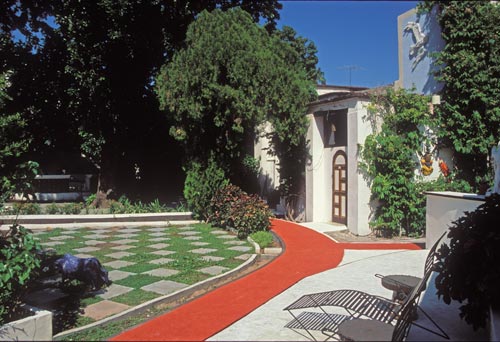
The Inn is 4,000 square feet with four bedrooms and four baths. And then there are the yards. Everywhere you look the unexpected appears, lurking or jumping out at you. The checkerboard lawn, with squares made of brick and alternating grass, is a page from Roberto in Wonderland.

Casa Obregon 18 gardens, Alamos, Sonora, Mexico.  Photo by Anders Tomlinson.

The fountain is dry. A broken pipe has cut off water to Centro Alamos.

This was the third day of no water to central downtown east of the Church. It would be another two days before service was be restored. Today, 2011, Casa Roberto is for sale. The gardens, colors, sculptures and eccentric design can be yours for $550,000 USD. Ghosts are included – free of charge.

Portrait of Roberto Bloor, Alamos, Sonora, Mexico.  Photo by Anders Tomlinson

Roberto in between two of his birds of art serenading one another.

It was easy for Roberto to take a moment and flash a big smile for my camera and then go on his way, managing another day, talking to himself under his breath.

Casa Roberto, Casa Obregon 18 sala, roberto bloor's patio. alamos, sonora, mexico. photo by anders tomlinson.

Fanciful creatures, at the waterhole, inhabit an organized landscape design

Roberto’s mosaic art and sculptures are everywhere on the property – indoors and outdoors. Casa Obregon 18 is a statement to an individuals creative drive. Here is balance, statement and projection. Here is life as art and art as life. Here was Roberto Bloor.

Casa Roberto, Casa Obregon 18, roberto bloor's patio. alamos, sonora, mexico. photo by anders tomlinson.

It is hard not to follow the walkways to get from here to there at Casa Roberto

To see more Alamos Journal pages.

To return Home.

©2013 Anders Tomlinson, all rights reserved.

Conasupo

40 … Government agencies come and government agencies go …

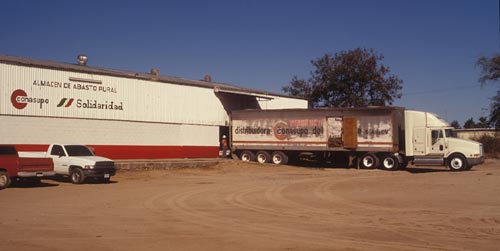
Conasuop warehouse, Alamos, Sonora, Mexico.  Photo by Anders Tomlinson.

Conasupo, Compania Nacional de Subsistenias Populares, was everywhere.

In the mid-60’s Conasupo was created. Conasupo would impact agricultural policies, food products, food consumption and rural economics throughout Mexico. The Alamos Conasupo distribution warehouse was in the barrios northwest of Alamos Centro and served all of the Alamos municipality. Following the debt crisis of 1982, Conasupo was reformed by the Mexican Government as part of a market liberalization process. For villages, ranches and the poor – Conasupo meant access to subsidized food staples like corn tortillas.

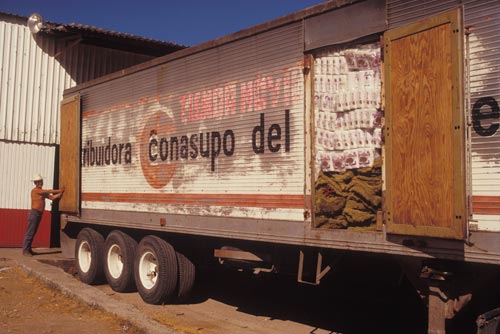
Conasupo truck, Alamos, Sonora, Mexico.  Photo by Anders Tomlinson.

Big truck, large mission, enormous landscape.

Conasupo was seen on signs and trucks throughout Alamos and all of Mexico. It managed stores that sold food staples to the urban and rural poor. Conasupo controlled production, processing and distribution of barley, beans, corn, rice, sorghum, soy beans, wheat, copra, cotton, sesame and sun flowers. It was the Mexican government managing Mexico’s food chain. And it was also human nature taking advantage of opportunities. Corruption and Conasupo were one and the same in the eyes of Conasupo detractors.

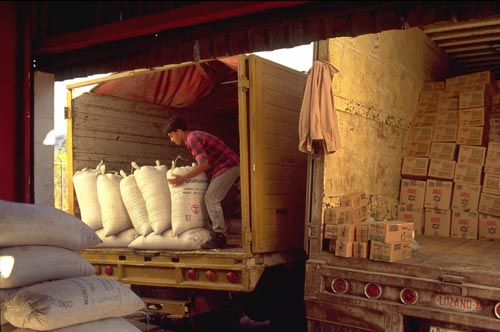
loading Conasupo truck, Alamos, Sonora, Mexico.  Photo by Anders Tomlinson.

Boxes, bags, sacks and materials are loaded to be distributed far and wide.

During the 80’s and 90’s the Mexican political landscape was changing with intervention of the North American Free Trade Agreement, NAFTA, and the World Trade Organization, WTO. Conasupo began terminating one market-control-crop-subsidy after another. In 1999 the Zedillo administration eliminated corn tortilla subsidies and finally liquidated Conasupo. Direct government intervention in agricultural markets was coming to a close. For the young man above, lifting one heavy sack after another, it meant finding a new job.

To see more Alamos Journal pages.

To return Home.

©2013 Anders Tomlinson, all rights reserved.

Hurricane Fausto

37 … A storm hits, a tree falls, man removes tree and repaves street…

trees fall in Alameda, Alamos, Sonora, Mexico. Photo by Anders Tomlinson.

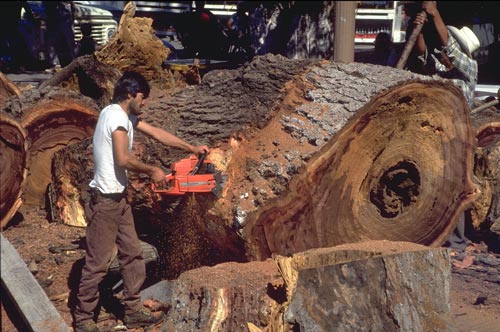
An old cottonwood trees was uprooted by a summer storm.

Hurricane Fausto, in 1996, uprooted a giant cottonwood tree in the Alameda. There was minor damage elsewhere, but nothing life threatening or forcing people from their homes. In the aftermath men quickly began to cut the tree into large sections. The tree was directly exposed to the winds from the west.

cutting tree in Alameda, Alamos, Sonora, Mexico.

One damaging aspect from Fausto, one big cleanup for man.

Where does one start to remove a fallen tree? One moves it from the street so traffic can flow again and then one begins to cut it up into smaller pieces: one cut, two cuts, three cuts, four, and … The significance of this photo series is it demonstrates how Alamos continues to be what it is today: build, repair, rebuild, remodel, redecorate, repair, rebuild and…

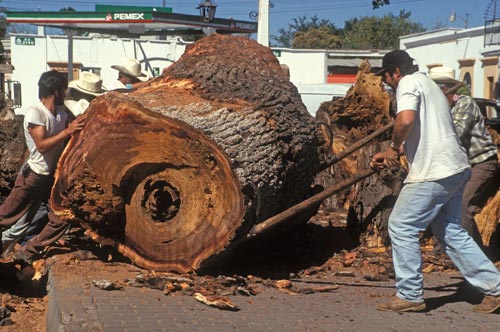
moving tree by hand in the Alameda, Alamos, Sonora, Mexico.  Photo by Anders Tomlinson.

Simple tools and strong backs take on a heavy task.

Man has moved large objects for thousands of years with the understood laws of physics and tools made from available materials. For a brief moment i saw men building pyramids in Egypt, laying out Stonehenge and erecting monuments on Easter Island. It is part of our DNA.

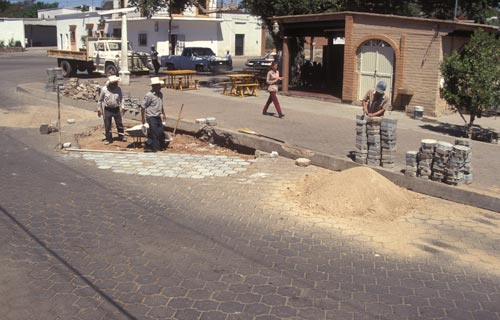
repaving street, Alamos, Sonora, Mexico.  Photo by Anders Tomlinson.

The tree is gone, removed section by section. Time to repave the street,

Rebuilding has begun. The missing tree will be memorialized by the new bricks in its place surrounded by weather, oil and rubber stained bricks. Hurricane Norbert, 2008, was one for the history book. It took out all of the Alameda’s remaining cottonwoods. I received a note from Beverly Krucek including this information, “The Alameda has been completely redone….the basketball court removed and a poplar tree lined esplanade built in….antique green benches surround the whole area and it makes a wonderful eye “rest” in the middle of town. The aforementioned basketball court has been moved to a Sports Arena at the entrance of town which also includes a soccer field, baseball, tennis courts and a proposed swimming pool. The next step is to create some sort of recreation center.” Beverly Krucek is involved with the local Alamos History Club which meets most Thursdays fall through spring. And life goes on in Alamos, Sonora, Mexico: The flood of 1770, the hurricane of 2008, the… and it goes on.

An occasional summer storm floods three arroyos in Alamos with mountain runoff.
Summer is the rainy season. Occasional tropical storms, remnant of hurricanes, come in from the Sea of Cortez to the west. This is the morning after a storm hit the region hard the previous evening.

And Then the Storm Came

The summer rains are here, the sweet night air cools warm bodies bringing relief and contemplation. The purity and hope of laughing young couples, alone with each other, drenched to the bone, clinging wet clothes, make their way home late at night splashing and dancing in cobblestone puddles. Above, the heavens explode, a cannonade of thunder rumbles across silhouetted mountain ridges backlit by fantastic lightening. It is time to go to asleep under one sheet in the cool of a warm night. And then the big storm, remnants of a tropical typhoon, arrived. In an instant the sky turned angry dark, the air became colder and a deafening wind shrieked through the trees. It rained and continuously howled from late afternoon until just before dawn. In the morning, stunned town folk came out and watched from a safe distance the fast running rivers that are normally dry arroyos. Over the coming days waters receded, children played in cool shallow pools and rock men filled their trucks with fresh sand. Photos and editing by Anders Tomlinson.
Music from “Camino Songs” by SonicAtomics.

To see more Alamos Journal pages.

To return Home.

©2013 Anders Tomlinson, all rights reserved.

Álamos Bandstand – Kiosk

76… Quiet days in Plaza de Las Armas as stewardship continues on…

Kiosk- band stand with green roof, Alamos, Sonora, Mexico.  Photo by Anders Tomlinson

1984, It is a quiet day in the well-maintained Plaza de Las Armas.

All sight lines lead one to the Kiosk, the visual centerpiece of the
Plaza de Las Armas. In days of old, traveling dance bands would
donate an hour public performance in the Kiosk to avoid paying a
municipal tax and also help promote their evening concert. The
elevated bandstand Kiosk offers a wonderful vantage point of Plaza
activities and surroundings.

Looking down at the Plaza in the Spring of 1982. Photo: Kit Nuzum.

Bishop Reyes Cathedral and Sierra de Álamos as a backdrop, especially
with magic sunrise-sunset light, is a stunning vista from the Kiosk.
Here, curious imaginations can sense the past. The kiosk, which was
built in Mazatlán, Sinoloa and moved in sections and pieces to
Álamos, was dedicated on September 15, 1904.
And the music continues on.

Summer day in the Plaza de Las Armas, Alamos, Sonora, Mexico.  Photo by Anders Tomlinson.

1996, large rose bushes filled up the park surrounding the Kiosk.

Twelve years have passed from the first photo to the second. Much is
the same and some has changed. The landscaping is different: roses
cover much of the bare ground have replace small trees and scattered
bushes. A decorative backdrop for a drinking fountain has been added
to the northwest corner of the park. And the kiosk’s canopy is now
painted red. Many of my North American friends in Álamos were
displeased with the change, they felt it was a cheap move to make the
plaza more touristy. Ah, the hands of change move in synchronized
concert with the hands of time as man restores, rebuilds and remodels.

restoration work on the Kiosk in Plaza de Las Armas, Alamos, Sonora, Mexico.

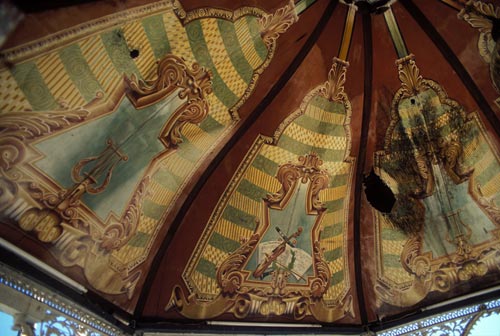
Restorers begin work on the inside panels of the Kiosk canopy.

The cloth painted mural panels in the Kiosk were badly deteriorated
and pigeons nests were inside the torn fabric and the canopy
ceiling. Museo Costumbrista de Sonora’s director Tony Estrada
was in charge of the restoration project. Osvaldo Contreras Cantu,
the man in red, did the reproductions of the quiosco paintings in
1996. Another restoration took place in 2008 and there will be
more in the future – just another day in the life and upkeep
in a Colonial town.

alamos sonora mexico kiosk torn fabric panel, 1996, photo by anders tomlinson

Music is part of the fabric that is daily life in Álamos.

Antonio, a fine-art sculptor in his own right, has strived to maintain
the colonial integrity of Centro Álamos. As I write this post I
realize I have images in one of my Álamos books of un-scanned slides
of the panels just before these men started to remove them.

torn kiosk fabric panel, 1996, alamos sonora mexico. photo by anders tomlinson

There is wear and tare as days, becomes months, become years.

Earlier today I scanned the slides and added them to my digital Álamos
image database. I saw on the beautiful tourism site Álamos, Pueblo Magico
that the panels were restored, and maintained, to their original
magnificence. Stewardship in the face of advancing time and the hands
of unrelenting gravity is never done until there is no more to steward.

Plaza de Las Armas seen from Mirador, Alamos, Sonora, Mexico.  Photo by Anders Tomlinson.

A bird-eyes view of Plaza de Las Armas as seen from Mirador.

Even from a great distance the Kiosk draws the eye as one takes in the
Plaza from up high on Mirador to the east. The colonial charm of
Álamos, and the interaction of its citizens, is evident in this photo.
On November 23, 2000, President Zedillo declared 188 Álamos, Sonora,
Mexico structures as National Historic Monuments. The buildings seen
here were built in the last half of the 18th century on older existing
sites. I am certain that a photo taken today from the same place with
the same lens will be much the same. Plants and paint may be
different but the historic structures will be the structures that have
been here for over 200 years.

The Kiosk-Bandstand in Plaza de las Armas, Álamos, Sonora, México from Guadalupe hill in the Summer of 1996.  Photo by Anders Tomlinson.

Kiosk scenes and details from 1996.

The Kiosk can be a place to be seen and a place to look out and see.
At times it is a place to roost or talk or play or take photos or
embrace life.

Kiosk/Bandstand in Plaza de las Armas, Álamos, Sonora, México.  Photo by Anders Tomlinson, late February 2017.

Carnival come to the Plaza in late February 2017.

It is another year and another day in the Plaza. The kiosk/bandstand
remains. There have been changes to it and much has remained the
same, this is true for much of Álamos, Sonora, Mexico.

Detail of the Kiosk in Plaza de las Armas, Álamos, Sonora, mexico.  Photo by Anders Tomlinson, late february 2017.

The beauty is in the detail for all to see and appreciate.

I believe the restoration project in 2008 accounts for the kiosk’s
present color schemes. The surrounding bushes and trees have gotten
larger. The last time I visited, the kiosk was surrounded by rose
bushes, several palm trees and mucho bare ground. Often the first
person I saw in the morning was the gardener tending roses at
daybreak.

Nighttime is coming to the kiosk andPlaza de las Armas, Álamos, Sonora, mexico. Photo by Anders Tomlinson, late february 2017.

Nighttime is a special time in the Plaza, most weekends there is an event.

There are magical moment awaiting the kiosk as the sun is going down
and stars will come out and move slowly across the Sonoran sky. One
of the biggest changes I saw since visiting in 1996 was the amount of
decorative municipal lighting in Centro Álamos including the staircase
leading to the top of Mirador. It is beginning to cooldown. Food
aromas, music and conversation fill the Plaza. The kiosk is here
for another night as it has been since 1904.

Estudiantina de Álamos performs before a packed Plaza
as a film crew captures the event.

It is a big day in the Plaza. A TV crew has come to town and is filming
a music concert. Estudiantina de Álamos, a crowd favorite, is
performing. They will also back up several other acts. The bandstand
is surrounded by adolescent girls and an scattered smiling mothers.

Spring Day in the Plaza – Part Two: Getting Ready for another Day.
In the cool of the morning folks go about hand sweeping and cleaning
the streets and sidewalks of Álamos, Sonora, Mexiso. Residents take
pride in the town’s appearance. Enjoy a 360 degree pan of the plaza
from the gazebo-bandstand in its center. We end with the garbage men
making their rounds.

This is a Blessed Season for a Multitude of Reasons.
In mid-afternoon the air pressure begins to drop and a stiff wind
sweeps the valley from the west, a storm is coming. Night falls and
showers start. We go from the Plaza to the Alameda and back. The
following day the sun comes out and then is covered by clouds. Kids
play and men work gathering sand in the arroyos. A summer day can be
complex in its textures and atmospheres.

To see more Álamos Journal pages.

To return Home.

All photos by Anders Tomlinson unless noted.
©2013 Anders Tomlinson, all rights reserved.

Baseball & Rodeos

70… I say baseball, you say beisbol and it’s three strikes and you are out…

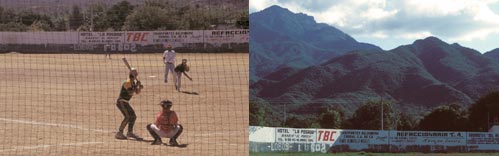
Baseball in the streets of Barrio Barranca, Alamos, Sonora, Mexico.  Photo by Anders Tomlinson.

Arroyos-roads will do for makeshift baseball fields.

Baseball is not Mexico’s national pastime, and it is no longer the USA’s, but it is popular, particularly in the northern states. Beisbol was introduced to Mexico in 1847 by American soldiers during the Mexican War. Americans overseeing railroad construction also encouraged Mexican workers laying track to play beisbol. On July 4th, 1889 work stopped on the Monterrey-Tampico railway in Nuevo Leon to celebrate the holiday as Colonel Joseph Robertson and his workers played baseball. Organized beisbol started in 1925.

Dugouts at the ball park, Alamos, Sonora, Mexico.  Photo by Anders Tomlinson.

The sweet smell of neatly groomed dirt, batter up.

It would not be surprising to think that there are kids who dream of playing professional baseball as they take to the field at the Alamos ball park halfway between the Plaza and the airport. The Mexican Pacific League is the premier Mexican winter league. 27% of its 445 players come from Sinaloa and 20% come from Sonora. Teams close to Alamos include the Yaquis de Obregon, Mayos de Navajoa, Caneros de los Mochis – the Sugarcane Pickers and Naranjeros de Hermosillo – the Orange Pickers. Fernando Valenzuela, who took Los Angeles by storm as a successful pitcher for the Dodgers, Fernandomania, was born in Etchohuaquilla a small town near Navojoa. One of the allures of baseball is so much of the game takes place in the mind as one waits for the action to come. Baseball is a game from dreamers.

baseball park in Alamos, Sonoroa, Mexico.  Photo by Anders Tomlinson.

Build it at the foot of Sierra de Alamos and they will come.

The warrior that is always looking up at the western sky atop Sierra de Alamos can hear the roar of fans when a run scores in a big game for the home team. The photo on the left was taken in the spring, the photo on the right was taken in the summer. This is a ball park with a wonderful view. Sierra de Alamos is a magnificent hitter’s background.

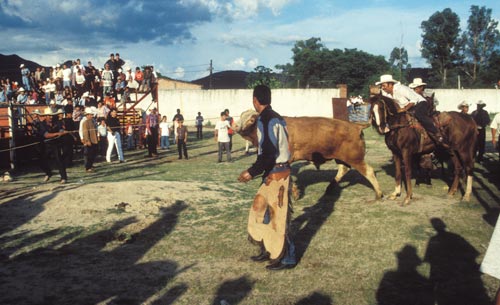
Summer rodeo at the ball park, Alamos, Sonora, Mexico.  Photo by Anders Tomlinson.

They play more than baseball at the old ball park, root root for the cowboys.

The rodeo had come to town. The event had fallen behind schedule and the crowd grew uneasy waiting for the show to begin, and they waited and milled as summer clouds came and went. And when it started it was hard to tell it had started. Unorganized is a polite term to describe the promoters. The posters around town publicized this event as a rodeo – music concert. The headline singer, who was backed up by a local band that provided the sound system and stage, also was late arriving. More clouds came and went. More drinking. More huddling. After the rodeo finished the cowboys stood in a line to thankfully pray that no one had been seriously hurt. And then it was time for music and dancing horses. For more on the band visit Journal entry 33.

A summer rodeo – music concert with trained horses dancing the two step.
Throughout the summer there are activities to enjoy in Alamos, Sonora, Mexico. On this day the rodeo came to town along with a Mexican pop singer who was backed up by the local “Halcon de Sierra Alamos” band. The stars of the show were the dancing horses.

To see more Alamos Journal pages.

To return Home.

©2013 Anders Tomlinson, all rights reserved.

Los Tianguis

52… Thoughts from an anonymous source, photos by Anders….

I have always enjoyed creative collaboration. One of my goals is to edit and design a book – DVD intermixing my photographs, and videos, with words from people who know Alamos well. The followingly thoughts were given to me by in 2003 by Kit Nuzum as I was beginning to edit video from Spring and Summer of 1996. I think someone else wrote these words with, or for Kit, possibly Liliana Carosso. For the time being we will credit the famous Anonymous.

Los tianguis, open air market held on sunday mornings in Arroyo La Aduana.  Alamos, Sonora, Mexico.  photo by Anders Tomlinson.

Sunday morning is colorful outdoor market time in Arroyo La Aduana.

The Tianguis, a Sunday open air market where for four dollars we acquired six tomatoes that smell vine ripened, five avocados in appropriate stages of ripeness for a week’s worth of guacamole, two dozen unwashed ranch eggs, half a kilo of excellent Chihuahua cheese, three bedding plants and the pleasant aftertaste of breakfast at the best fish taco stand in Sonora…

Produce stall at open air Sunday market, Alamos, Sonora, Mexico.  Photo by Anders Tomlinson.

Discerning eyes, aware of quality and bargains, shop for produce.

Like the blast of ranchero music from the adjacent CD stand accompanying purchases at our favorite produce stall, the gentle generosity of the Mexican psyche makes us love marketing and Mexico itself…

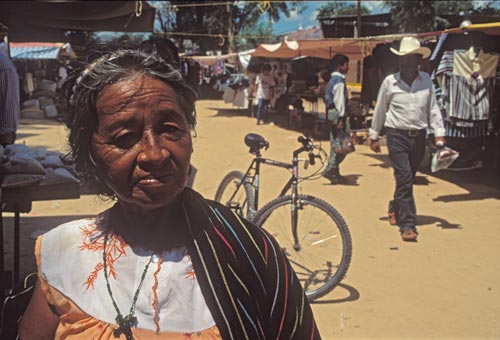
Indian woman in open air market, Alamos, Sonora, Mexico.

A proud face made beautiful by life's challenges and aging wisdom.

My notebook indicate that this woman’s name is Alejandico Lopez. I would be so happy if these notes were right. And now back to Anonymous…

Learning to be quick of hand when the Mexican housewives crowd in ahead of you and plop their purchases on the scale while you patiently stand aside, they know you are a gringo. You wear silver not gold, white women wear men’s hats, so you extend an extra effort to be courteous. Never mind, just get these potatoes on the scale, that cilantro looks nice…

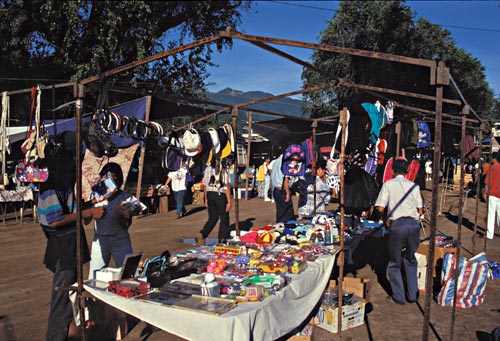
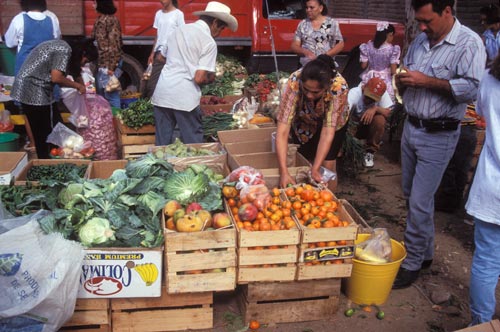
They come from all over the region with things to buy and sell.
Sunday, north of Arroyo La Aduana, there is an open-air market filled with people and music. Meals, snacks, produce, clothing, toys, tires, bikes, tools and what ever folks bring to sale fill out both sides of a colorful promenade. It is a wonderful place to shop and meet neighbors, family and friends, new and old. These market scenes were filmed during Christmas, 1993. Video…

What better place to be on a beautiful Spring Sunday morning.
There are many places to be on an Alamos Sunday. One is the open marketplace los Tianguis. merchants arrive early to setup their wares. The morning starts calm as customers begin to arrive. Soon the breezes have arrived. Cottonwood leaves rattle in the wind. Music floats from booth to booth. Children laugh and adults barter. For many this is an important shopping trip for others its is reason to be out, see and be seen.

Together they are a community, one for all, all for one.
Brisk Spring winds continue on through the late morning at los Tianguis in Arroyo Aduana.
This is small town Mexico. Family, friends, eating, shopping, and catching up with those one hasn’t seen in awhile: months, weeks or maybe an hour ago.

To see more Alamos Journal pages.

To return Home.

©2013 Anders Tomlinson, all rights reserved.

Geologic Timeline

A step back in time starting with the coming of the age of mammals…

Atop Sierra de Alamos at sunrise, Alamos, Sonora, Mexico. Photo by Anders Tomlinson.

Atop Sierra de Alamos, near Gringo Point, looking south at sunrise into Sinola.

So much of Alamos-Sonora-Mexico.com is about history. In that spirit let us peek at the region’s geologic history, stand earth time. The Sierra Madre Occidental and the Rocky Mountains began to form 90 to 30 million years ago along the west coast of North America. Ocean levels were much higher than today, back then there was no Florida. The age of mammals started 66.4 million years ago. Sierra de Alamos was beginning under great pressure deep in the earth along with what would become Aduana’s silver deposits.

Granite Outcroppings on Sierra de Alamos, Alamos, Sonora, Mexico.  Photo by Anders Tomlinson

Sierra de Alamos is granite, only recently has it emerged from the earth.

Northwest Mexico, including Alamos, was buried under thousands of feet of ash, cinder and lava flows. Volcanic eruptions began 25 million years ago and continued another 12 million years, give or take a day or two. The Sea of Cortez began to form 12 to 3 million years ago as the Basin and Range block building was underway. Sierra de Alamos was still underneath a layer of all things volcanic. Over time erosion cut into ash flow plateaus creating landmarks like Barrancas del Cobre, Copper Canyon, whose materials were washed away and deposited near Sierra de Alamos. The rising mountain was still cover by blankets of earth.

View from atop Mt. al;amos looking south west, Alamos, Sonora, Mexico.  Photo by anders Tomlinson.

Atop the mountain looking southwest towards farmland and the Sea of Cortez.

As time marched on climate changed. The region began to cool 15 to 30 million years ago. Two to four million years ago it was warming up and raining. Most of the past two million years has been an ice age with 15 to 20 glacial periods. And now the planet is warming again. From a distant gallery it may look as if earth’s climate ebbs and flows like clockwork as the solar winds race past our blue planet, a molten rock with the thinest of crust and atmosphere.

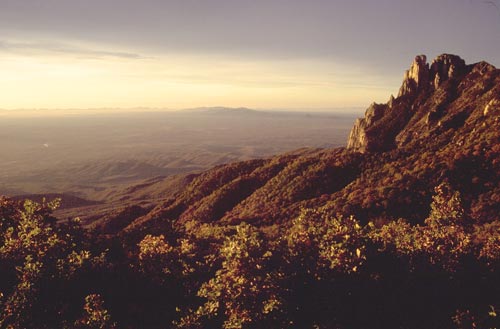
Atop Mt. Alamos looking north at Alamos, Sonora, Mexico.  Photo by Anders Tomlinson.

Spring time on the mountain looking north with Alamos waking up below.

Today, Sierra de Alamos rises thousands of feet above its surroundings. And many have visited Alamos to research the region’s geology, flora and fauna. Josephine Scripps was asked by the San Diego Natural History Museum in the 1940’s to lead a group of six young men, none who spoke spanish, on a natural science expedition to Alamos. They were to bring back a rare mountain sheep’s skeleton and hide. Josphine, 1910 -1992, was the granddaughter of Edward Scripps, founder of the Scripps – Howard newspaper chain. Her life-long pursuit of collecting mineral specimens from across the planet began on that trip to Alamos.

To see more Alamos Journal pages.

To return Home.

©2013 Anders Tomlinson, all rights reserved.

Estudiantina de Alamos

15 … Making music a way of life and continuing traditions…

Estudiantina de Alamos, Sonora, Mexico.  Photo by Anders Tomlinson.

One step into the past is three steps into the future.

I heard of a tour that the Estudiantina de Alamos had made to San Francisco and Los Angeles. It would be wonderful if this organization of young men could retrace de Anza’s steps in California. Just think, Estudiantina de Alamos performing in San Francisco, Monterey, Santa Barbara and Los Angeles. It would make a beautiful poster. Natural sponsors would be these cities’ Historical Societies. Cultural roots are most clearly understood through music. Wherever these young men stroll singing they are Alamos ambassadors.

Estudiantina de Alamos, Sonora, Mexico. Photo by Anders Tomlinson.

They play often in many places, they are part of Alamos' heart.

On this evening the Estudiantina de Alamos was playing on the steps of Old Hospital ruins left standing as part of a restoration into a hotel.
A bus load of Copper Canyon tourists were being entertained and dining. And then a murmur swept through the bustling patio, heads turned and whispers followed. Carroll O’Connor, actor and Alamos home owner, had entered the room which rose in a standing ovation.

Estudiantina de Alamos performs before a packed Plaza as a film crew captures the event.
It is a big day in the Plaza. A TV crew has come to town and is filming a music concert. Estudiantina de Alamos, a crowd favorite, is performing. They will also back up several other acts. The bandstand is surrounded by adolescent girls and an scattered smiling mothers. Video…

To see more Alamos Journal pages.

To return Home.

©2013 Anders Tomlinson, all rights reserved.

Rancho Las Crucecitas

You say Estancia Crysalis – I say Rancho Las Crucecitas…

walking home from town to Estancia Crysalis, Alamos, Sonora, Mexico.  Photo by Anders Tomlinson.

This may not be a well-traveled road but it is a long-traveled path through time.

If one were to close their eyes and listen to the footsteps of this old woman, with a young woman’s body, one would hear someone going back in time, retracing footprints of the ancient ones as this old woman returns to Estancia Crysalis. Here is another world where the land speaks in a dominate voice. Listen carefully, and one will hear sounds that Indians heard before the arrival of the Spanish. Here, there is a purity of all things nature.

Looking east from the main house at Estancia Crysalis, Alamos, Sonora, Mexico.  Photo by Anders Tomlinson.

And there is Chihuahua, and there are Sierra Madre foothills and there is...

It is a short, invigorating walk from Plaza de las Armas to Estancia Crysalis on paved road, the old El Camino Real. The slight incline, as you rise into rolling Sierra de Alamos foothills, stirs the minds and exercises the heart. The entrance to Estancia Crysalis is across the road from the El Mirador. The dirt road into Estancia Crysalis follows Arroyo Barranquita. Once on the ranch there is the Sierra Alamos, right there, in all her beauty, framed by 200 year old Mesquite trees.

Horse stalls at Estancia Crysalis, Alamos, Sonora, Mexico.  Photo by Anders Tomlinson.

For the Arabians these were stalls for students these were shelter.

And so it was and so it is. Estancia Crysalis was formerly known as Rancho Las Crucecitas. The last owners of Rancho Las Crucecitas, Dr. Martin Dale Edwards and his wife Zora Tyler, raised a select herd of 22 purebred Arabians. These rustic stalls were the horses homes. Sharon Bernard is the current owner and changed the ranch name to Estancia Crysalis. A group of college students on a field trip from the USA stayed at Estancia Crysalis and used these stalls for lodging. And so it was and so it is.

A Ranch on the outskirts of town, looks forward to the future.
Estancia Crysalis, along the El Camino Real, is a mile southeast of the Plaza in Alamos, Sonora, Mexico. The 175 acre ranch, on Sierra de Alamos sloping foothills, is focusing on a new day, and listening for opportunities floating on tropical breezes. Video…

The above video is from summer. The following video is spring. Estancia Crysalis experiences the seasons in all their dramatic changes. Life in Centro Alamos is dominated by man’s structures and gardens. Life on Estancia Crysalis is dominated by nature.

In another era, Estancia Crysalis was a working horse ranch.
Today, the spirits of these departed steeds, proud Arabians, are present, be it a sound of a branch breaking under weight or a small flurry of dust. Shut your eyes and listen, they are still here. Video…

To see more Alamos Journal pages.

To return Home.

©2013 Anders Tomlinson, all rights reserved.

Mirador Kite Festival

101… On Mirador for the kite flying contest.

Kite festival in Alamos, Sonora, Mexico. Photo by Anders Tomlinson.

Kite flying is a popular past times for the children of Alamos.

The winds of Álamos more come than go and when they are blowing kite flying takes place across the barrios. Sticks, paper, string are a child’s opportunity to take flight and be one with the elements. The child in all of us enjoys watching children enthralled with their kites dancing on a breeze.

Participants in the kite flying contest parade through the town on their way to and from El Mirador, Alamos, Sonora, Mexico.  Photo by Anders Tomlinson.

Many of the festival's colorful kites parade proudly through Alamos.

On the day of the festival kites, and their builders-owners, are seen on their way to and returning from El Mirador. Colorful pennants snapping in the winds on El Mirador announce to the people below that today celebrates a special event.

Kite flying participants atop El Mirador, Alamos, Sonora, Mexico.  Photo by Anders Tomlinson.

This is the place to be: a windy day on top of the world with friends.

The kite flying contest was started by Cammie Nuzum and her then husband Chaco Valdez. These photos are from the 1996 festival. The recent 2012 contest was sponsored by Cammie and Elizabeth Nuzum. Kites were not always a place for children’s imaginations to soar. One of the first written records of kite flying is from around 200 B.C., Chinese General Han Hsin of the Han Dynasty wanted to know how far his troops would need to tunnel to enter a rival city. He flew a kite to measure the distance. With this information in hand his army was able to surprise the enemy and capture the city.

Detrails of competing kites flying in the Alamos kite Festival with Earle and Joan Winderman watching, Alamos, Sonora, Mexico.  photos by Anders Tomlinson.

The kite festival is a colorful event to attend with all of Alamos at your feet.

Joan and Earle Winderman, that is a nice kite flying name, enjoyed a sunny day on El Mirador. Besides myself, they were the only gringos I saw at the festival. Whether one is flying a kite, or a spectator, everyone watches the kites.

Close-up of a festival kite's construction, Alamos, Sonora, Mexico.  Photo by Anders Tomlinson.

It is colorful and well constructed but it will if fly with grace and agility.

The kites become what their builders want them to be. Days of design and construction lead up to contest. There is much to learn building a kite. Natural science, mathematics, aeronautics, history, culture, art and crafts come together as a flying objects and opportunities for self-expression.

Kite being presented to a judge for judging, Alamos, Sonora, Mexico.  Photo by Anders Tomlinson.

A kite awaits inspection by a judge. The event was organized by the Museo.

The Museo Costumbrista de Sonora displays the kites after the contest. For centuries kites were used by only by the military. Around the year 600, during the Silla Dynasty of Korea, General Gim Yu-sin’s troops refused to continue fighting because they has seen a shooting star and believed this was a bad omen. The General sent a fire ball into the sky with a large kite. The soldiers, seeing the star return to heaven, rallied and defeated the rebels.

Buddhist monks brought kites to Japan around the 7th century. They were thought to be able to protect rich harvests and deter evil spirits. During the Edo period kite flying became very popular when Japanese people below the samurai class were allowed to participate. The Edo (now Tokyo) government tried unsuccessfully to discourage this pastime as “too many people became unmindful of their work.”

Kite Festival in action, Alamos, Sonora, Mexico.  Photo by Anders Tomlinson.

Amongst all that is going on a flyer must keep his focus on his kite.

Álamos is a wonderful place to fly kites especially from El Mirador up high and open to the winds that carry molecules Caesar, Leonardo da Vinci and Marilyn Monroe breathed. There is a timeless quality to kite flying. It is as as much about the flyer’s thoughts as it is about flying.

Kite flying began in Asia and slowly word spread to Europe. Marco Polo, around the end of the 13th century, brought back to Europe stories of kite flying. Period Illustrations showed military banners with non-flying dragon kites. 16th and 17th century sailors brought kites back from Japan and Malaysia. Kites at first had little impact on European culture and were regarded as curiosities.

Flyers work their kites on a western wind, Alamos, Sonora, Mexico.  Photo by Anders Tomlinson.

Boys and their flying machines work winds off the Sea of Cortez.

Standing with their backs to the Sea of Cortez, the kite-flyers work the western on-shore winds and the drafts that come from the eastern Sierra Madre foothills.

As time marched on kites became universal and many used kites as scientific research tools.
In the 18th and 19th centuries men like Benjamin Franklin and Alexander Wilson learn more about the wind and weather used their knowledge of kite flying. Airplanes came about with the help of kite experiments by Sir George Caley, Samuel Langley, Lawrence Hargrave, Alexander Graham Bell, and the Wright Brothers.

A young boy flying his kite at the Alamos Kite Flying contest, Alamos, Sonora, Mexico.  Photo by Anders Tomlinson.

And all the world, this very moment, is in his hands and in his control.

Here atop El Mirador the Sea of Cortez is some fifty miles to the west and the Copper Canyonlands are some fifty miles to the east. One could say the kite-flyer’s feet mark the center of the universe and their kites announce ownership of the moment.

Warmth Radiates off of Adobe Walls as Another Winter Day Begins.
Kite flying is popular in Álamos, Sonora, Mexico. Drinking beer outside the pickup with friends is popular. Fun and work go on side by side as we visit a wood shop.

To see more Álamos Journal pages.

To return Home.

©2013 Anders Tomlinson, all rights reserved.

Cornucopia

26 … Learning what, how, when and why all these plants and trees grow.

big purple flower , alamos, sonora, mexico garden.  photo by Anders Tomlinson.

As close as one looks there is always more to see

Gardening and passion are one in the same for many that embark on horticultural adventures in Alamos. There are right ways, wrong ways, and the ways of trial and error. There are friends, neighbors, hired help, books and the internet to help one plant, raise and blossom. It is about design, texture, color, creating and life itself.
It is better to have planted and lost than never planted at all.

Judith Jacoby gardens, Alamos, Sonora, Mexico. Photo by Anders Tomlinson.

There are gardens and there are gardens and there was the Jacoby gardens.

I took this photo of Judith Jacoby’s gardens in 1983 with Gaspar Vega standing amongst an explosion of spring blooms. This property was once a tequila factory warehouse owned by the Urrea family. The many Jacoby gardens start in court yards surrounding the house and spread out into large open areas. These are formal gardens set in a landscape that changes dramatically with the seasons. I will return to further explore her gardens in future posts. Gardens, in general, provide Alamos, hopefully, controlled splashes of color.

Garden walkway, Alamos, Sonora, Mexico. Photo by Anders Tomlinson.

Gardens come in many colors, sizes, budgets, time commitments and intents.

The flora of Alamos is the many splendors of Sinaloan tropical forest and Sonoran desert living together in unexpected harmony. Many properties have gardeners watering, pruning, consulting, planting, cutting, raking, commiserating, trimming and… year round. Flowers and vegetables are planted in November for winter blooms and crops that last until May or June’s heat… Mangos, papayas, bananas, palms, amapas, orchidias and other trees provide food and shelter for native and migrating birds. Cascades of colors come from flowering vines: blue veracruzana, orange trumpet, red, magenta and orange bougainvilla and… And the smells and scents that envelope one’s senses… Formal, informal… it all contributes to this symphony and riot that is the passing seasons in Alamos, Sonora, Mexico.

Behold a Cornucopia of Color, Shapes, Textures and Scents.
Alamos has six seasons a year and a diversity of native and imported flora. Gardening is both a passion and industry. It can become all consuming. It can be an mental oasis, freedom from the outside world’s cares and concerns. And it is something to share with those who visit, be it bug, bird, mammal or human.

<

A Way of Life
Gardens are places where we create new worlds, places of spirit or substance, or both… and more. Here we paint, design, experiment, learn, smell, admire, eat… Alamos, Sonora, Mexico is such a place, the valley itself is a garden where desert and dry tropical forest coexist.

Photos, editing and produced by Anders Tomlinson. Music is “Jardin de Colores”, written and performed by Samuel Delatorre Dorame, from his 2013 CD “Memorias de Alamos, Sonora.”

To see more Alamos Journal pages.

To return Home.

©2013 Anders Tomlinson, all rights reserved.

Barrio El Barranco

A little blue house in Barrio El Barranco…

Barrio El Barranco, Alamos ,Sonora, Mexico. Photo by Anders Tomlinson.

Bird's eye view of country life mere minutes from Plaza de las Armas.

The sun has just climbed over Red Cross Hill and reached Barrio El Barranco. Everyday details emerge as dark shadows quickly recede into bright sunlight. Notes and rhythms of farm animals, human voices, song and foraging nature presented in rural surround sound replaces town’s sonic-scape of commerce, government, religion, education and tourism.

Barrio El Barranca, Alamos, Sonora, Mexico.  Photo by Anders Tomlinson.

Living on a road that ends in the steep hills that become northern mountains.

These roads are traveled on foot, bicycles, cars, trucks, horseback and with burro. Soccer and baseball are played in the open areas. Laundry is washed in a tub by hand and then hung on a line to dry. Leisure time bows to the necessity of thrift and exercise is a healthy by-product of doing without the grid for certain essential tasks.
Life here is not a step backwards from the modern world, it is a life of contemporary balance, reality, and family. Laughs here are as loud as any in Centro Alamos.

House in Barrio El Barranco, Alamos, Sonora, Mexico.  Photo by Anders Tomlinson.

Built high above the road protects from marauding animals and flash floods.

Here is a close-up of the casa featured in the preceding photos. The paint is new and adds vibrant visual interest to those passing by on Calle 16 de Septiembre.
The homes are small, families are large with numerous pets and much of the heat and cooking comes from wood. Sticks are a way of life for many.

Children playing in Barrio El Barranco, Alamos, Sonora, Mexico.  Photo by Anders Tomlinson.

Kids playing on the roads of Barrio El Barranco.

El Mirador is seen in the background, south, as Calle 16 de Septiembre bends to the left, west, on its way out of town. Soon there will be no road, only a path headed into the surrounding wilderness. The road is filled with kids playing and the oldest care for the youngest. The young boy is serenading the young girl, each with an infant in their arms.

To see more Alamos Journal pages.

To return Home.

©2013 Anders Tomlinson, all rights reserved.

La Aduana

The landscape of La Aduana has rebounded from the best and worst of man..

Street in La Aduana, Sonora, Mexico. Photo by Anders Tomlinson.

Downtown Aduana on a typical weekday morning. Remants of mining dot the hills.

Spanish conquistador Vasquez de Coronado camped here during the winter of 1540-41. He was searching for gold in what turned out to be mountains with veins of silver. The mines closed in 1906 after nearly 400 years of continuous mining. La Aduana was the “custom office”, it was all about taxes and royalties. Life was hard and short with the hazards of the mines and the chemicals used in the extraction process. The curse of quicksilver had a wide footprint.

Looking east at La Aduana, Sonora, Mexico.  Photo by Anders Tomlinson.

Today, seven miles west of Alamos, Aduana is what it is.

Here seven miles west of Alamos, at 2,500 feet elevation with surrounding mountains as high as 4,700 feet, Aduana has less than 300 people where once there was 5,000. A church, country store, cemetery, a small restaurant-inn, a plaza with a dry fountain in its center surrounded by the past is Aduana today. And for some this is their home. And these are their hills with their months of desert and long summer of jungle.

Cooperativa Artesanos La Aduana, Sonora, Mexico.  Photo by Anders Tomlinson.

The woman come out to show their wares when visitors arrive.

Located near the church is La Aduana Art & Crafts. This is a cooperative of local ladies, seen here, with their products. This photo was taken in 1997. I wonder what Aduana is like today. I know the dust is the same and radios and televisions sing and speak from isolated homes. But has the realities of 2011 arrived? While researching Aduana on the internet I was surprised to see alamos-sonora-mexico.com being quoted, some would say plagiarized, by others sites. Indeed, this is 2011. In the next wave of Alamos video editing – mid May, scenes from Aduana will be posted.

cactus in wall of la adauna church, sonora, mexico.  photo by anders tomlinson.

A cactus grows out of a church wall and people come to pray.

This is not the London Bridge or the Grand Canyon but it is a quiet moment, in a now quiet town, that inspires those who believe.

burros drinking watr in la aduana, sonora, mexico.  photo by anders tomlinson.

Two generations gather for a drink at the local water hole - more puddle.

These burros could be descendants of working Aduana burros from the 1600’s. It was a hard life: grinding down ore in quicksilver or moving silver from the mines, to the Alamos treasury to Mexico City and back for another trip loaded with needed supplies.
Beasts of burden relax and calm La Aduana morning. Birds and insects fill the sky with sound. It is becoming warmer.
entrance to a mine in La Aduana, Sonora, Mexico.  photo by Anders Tomlinson.

Just think of all that took place deep within this silver mine. Think of the men. Think of how and why they are there. Think of their typical day. Think of where they laid down to sleep. Think of what they eat.

Here was Silver

Once this was a major silver mining town in all the world. Today, it is tucked away up in the hills with a quiet plaza and dry fountain. It is calm. Mining remnants dot the hillside. They are reminders of what was and what is.
Photos and editing by Anders Tomlinson. Music from “Camino Songs” by SonicAtomics.

To see more Alamos Journal pages.

To return Home.

©2013 Anders Tomlinson, all rights reserved.

Maria Felix

23 … The view out this window has changed over the past century…

Old adobe ruin at Galeana 41, Alamos, Sonora, Mexico.  Photo by Anders Tomlinson.

There was a day that this was the edge of town looking west towards wilderness.

1914 was in the middle of turbulent times for the region. Yaquis and Mayos were joining forces with Obregon and Villa’s armies. Venustiano Carranza became the third Mexican President in two years. One of them, Francisco Madero, was assassinated. Hard times were here. Maria de los Angeles Felix Guerrean was born April 8, 1914. This window looked out from her birth place. She had eleven sisters and brothers. They lived here until 1929 when they left for Guadalajara. Soon her beauty would be nationally recognized.

Galeana 41, Alamos, Sonora, Mexico.  Photo by Gary Ruble.

An Alamos beauty walks down Calle Galeana in 1993. Photo by Gary Ruble.

This is where Maria Felix was born and raised, riding horseback in a land that was losing its mines. Her father was of Yaqui Indian blood and her Spanish blood mother was raised in a Pico Heights, California convent. Much of the beauty that is seen in the faces of Alamos is a product of interlocking bloodlines that span the globe. There are European, Asian, eastern Indian, Philippine and indigenous Indian features across town. Maria described herself as ” a woman with a man’s heart.” She was a commanding presence, a beautiful liberator, a woman beyond her times. She made 47 films in Mexico and France. She became internationally recognized. She published a bestselling autobiography in 1993, All My Wars. And this is where her life’s journey began..

Galeana 41, 1996, Alamos, Sonora, Mexico.  Photo by Anders Tomlinson.

Step forward in time, it is now September 1996, late afternoon.

Hurricane Fausto was the storm that leveled the walls. The window is gone. Galeana #41 is now a mother of all ruins. A passing carriage takes tourists around town. Tomorrow would be another day. In 1999, Lynda Barondes bought Galeana #41. She was to learn later that this was the birthplace of Maria Felix. In 2002, part of Lynda’s restoration efforts, a Museum opened here with three rooms dedicated to the spirit Maria Felix embodied. The Museum closed in 2012 as Lynda sold the property and moved to the nearby southern foothills overlooking Alamos.

Buckle-up as we take a super fast-rock n’ roll car ride through Alamos on a grey winter day.
Driving Across Alamos on an overcast December day starts at La Puerta Roja Inn. We head east and circle the Plaza de Las Armas before heading to the Panteon – Cemetery. We head back to La Puerta Roja exploring different routes. The best way to travel is walking. Video…

To see more Alamos Journal pages.

To return Home.

©2013 Anders Tomlinson, all rights reserved.

Funeral Day

86… There comes a moment when we all say goodbye…

Grave Digger in Alamos, Sonora, Mexico graveyard.  Photo by Anders Tomlinson.

The Alamos cemetery provides an inspired and sacred work place.

There is always work for the grave diggers be it preparing the graves or maintaining the cemetery in a park-like setting for visitors and residents alike.

A fresh grave is being dug, Alamos, Sonora, Mexico.  Photo by Anders Tomlinson.

Another inhabitant will soon join those from the near and distant past.

Hours layer this grave will be occupied. Across town friends and family are preparing for a day all knew would come sooner or later. The earth gives way to the relentless pick.

The tombstone makers, Alamos, Sonora, Mexico. Photo by Anders Tomlinson.

The maestro's assistant watches another tombstone in progress.

Tombstones are made outdoors across Arroyo La Barranca and Arroyo La Aduana at the foot of Cerro Compana. Words of love and respect are chiseled into stone as stone gives way to the persistent Maestro’s tools.

the body is arriving at Bishop Reye's Cathedral, Alamos, Sonora, Mexico. Photo by Anders Tomlinson.

A time of loss, mourning, memorializing and inner reflection.

The church is ready, the church is always ready. The body has arrived followed by those who wish to say farewell and share with others this sad moment of passing.

Carrying casket into Bishop Reyes' Cathedral, Alamos, Sonora, Mexico. Photo by Anders Tomlinson.

Church bells ring out as solemn friends and family approach.

For one the wait is over, for others it is an emotional weight that will slowly pass with time. Today a name will be spoken out loud, in months it will be recalled in mind and soul and whispered to no one but oneself and the universe.
.

They proceed to the graveyard, Alamos, Sonora, Mexico. Photo by Anders Tomlinson..

After church services the procession across town begins as bells ring.

A mass leaves mass and the cobblestones of Alamos bear witness to another passing. There is a path from the church to the cemetery that has been worn smooth by loss and love.

Funeral procession approaches the cemetery, Alamos, Sonora, Mexico.  Photo by Anders Tomlinson.

A procession travels through Barrio La Compana as it nears the cemetery.

And they came in numbers day after day, year after year, century after century… it is what humans do. They walk, they talk, they cry and recall moments that were and plans that did not come to be… it is what humans do.

People arrived at the cemetery for the services, Alamos, Sonora, Mexico.  Photo by Anders Tomlinson,

The procession has slowly made its way east from the church.

The fresh grave awaits, clouds line the morning horizon, crows chatter in surrounding trees and barrio dogs go about their barking as the sounds of daily Alamos life echoes off surrounding hills and mountains. For some, at this moment, their world has stopped amidst the world that goes on uninterrupted.

Procession through the cemetery, Alamos, Sonora, Mexico. Photo by Anders Tomlinson.

The dead await a new arrival, passing feet kick up dust, little needs to be said.

People travel narrow pathways, cut flowers, in passing, brush against closely place tombs. The street-wide procession through town from church has become a solemn single rank slow marching to the grave.

To see more Alamos Journal pages.

To return Home.

©2013 Anders Tomlinson, all rights reserved.

Summer Rains & Hurricanes

17 … And then the rains came and hope springs eternal…

Man watching flood waters. Alamos, Sonora, Mexico.  Photo by Anders Tomlinson.

On this day Arroyo La Aduana does not encourage crossing.

Blusters from a hurricane passing over Alamos from the Sea of Cortez flooded the arroyos overnight. The town awoke to three avalanches of rushing water. Folks came to the water’s edge and marveled at the sound and fury of nature. And then some understood there are paradoxes embedded into natural orders of things; water, water everywhere – but not a drop to capture and command. Thankfully, gravity will ensure the surrounding aquifer receives a recharge.

Three flooded arroyos.  Alamos, Sonora, Mexico.  Photo by Anders Tomlinson.

Alamos, for this moment, has become the three rivers city of Sonora.

The view from Mirador looking to the northwest was another side of Alamos rarely seen, the town’s eastern center surrounded on two sides by water. I believe this was the doings of Pacific Tropical Cyclone Fausto headed northeast for Texas. Nature, you have to live with it because you can’t live without it. Why isn’t this Planet Water instead of Planet Earth?

bike rider crossing flooded arroyo, Alamos, Sonora, Mexico.  Photo by Anders Tomlinson.

The storm passed, the sun came out and the waters began to recede.

When the arroyos recede they become passable on on foot, bike and vehicle. Children take to the water, it is now fun, a challenge they can conquer. This boy is crossing Arroyo La Aduanaa and headed towards the Missionaries of Fatima’s monastery.

An occasional summer storm floods three arroyos in Alamos with mountain runoff.
Summer is the rainy season and tropical storms, remnant of hurricanes, can come in from the Sea of Cortez to the west. This is the morning after a storm hit the region hard the previous evening.

Storms come and go. The summer rains are here, the sweet night air cools warm bodies bringing relief and contemplation. The purity and hope of laughing young couples, alone with each other, drenched to the bone, clinging wet clothes, make their way home late at night splashing and dancing in cobblestone puddles. Above, the heavens explode, a cannonade of thunder rumbles across silhouetted mountain ridges backlit by fantastic lightening. It is time to go to asleep under one sheet in the cool of a warm night.

The summer rains are here, the sweet night air cools warm bodies bringing relief and contemplation. The purity and hope of laughing young couples, alone with each other, drenched to the bone, clinging wet clothes, make their way home late at night splashing and dancing in cobblestone puddles. Above, the heavens explode, a cannonade of thunder rumbles across silhouetted mountain ridges backlit by fantastic lightening. It is time to go to asleep under one sheet in the cool of a warm night. And then the big storm, remnants of a tropical typhoon, arrived. In an instant the sky turned angry dark, the air became colder and a deafening wind shrieked through the trees. It rained and continuously howled from late afternoon until just before dawn. In the morning, stunned town folk came out and watched from a safe distance the fast running rivers that are normally dry arroyos. Over the coming days waters receded, children played in cool shallow pools and rock men filled their trucks with fresh sand. Photos and editing by Anders Tomlinson.
Music from “Camino Songs” by SonicAtomics.

To see more Alamos Journal pages.

To return Home.

©2013 Anders Tomlinson, all rights reserved.

Alamos Short History

Back in the Old West When There Was No Old West
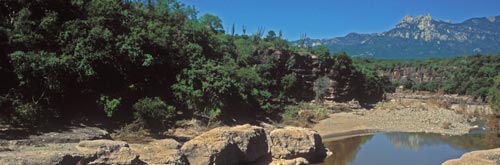
The Chuc

Looking west, explorer Coronado was struck by this mountain and landscape.

Tucked away in a picturesque valley in the foothills of the Sierra Madre is an enchanted Shangri-La that sings of other eras. Indians called this region Calimaya long before Spanish Explorer Vasquez de Coronado noted in 1540, ” here is something special…

The Spaniards called this land Real de los Frailes because of some tall white rocks resembling hooded monks overlooking a small Indian village shaded by cottonwoods.

These towering rocks speak loudly. They call for, and command, your attention.

In 1683, 143 years after Coronado, two abundant veins of silver were discovered seven miles to the west of present day Alamos. The mines of Aduana and Minas Nuevas, in a zone 4.5 by 1.5 miles, produced an estimated $100,000,000 in 1910 dollars.

Aduana is now a sleepy little village amid mine ruins.

Soon, Alamos was the richest and most important city on the El Camino Real. Juan de Anza arrived and departed Alamos sometime in the spring of 1775 with local families and freshly mined silver to settle San Francisco. Alamos money and citizens were also vital for expeditions that settled Monterey, Santa Barbara and five years later, Los Angeles. Father Kino used the Royal treasury to finance a chain of missions in northern Sonora and southern Arizona. The Bishop and Governor resided in Alamos, as did the first high school, printing press and newspaper and important trading center.

now and then spacer

♦  A timeline of De Anza in 1775

1775
January – de Anza, in Mexico City, begins to organize his expedition to to colonize San Francisco.

1775
March – de Anza begins recruiting colonizers in Culiacan, Province of Sinaloa, Mexico.

1775
April 5 – de Anza is recorded as being in Culiacan

1775
March, April, May – de Anza continued recruiting in the villages of Sinaloa and El Fuerte in the Province of Sinaloa, and Álamos, in Sonora. 30 citizens from Álamos, more than any other community, had joined the expedition, now more tHan 250 soldiers and colonizers.

1775
May 1 – de Anza is in El Fuerte.

1775
May 13 – de Anza, Espinosa and six presidial soldiers meet up with Moraga between Álamos and Horcasitas.

1775
June 22 – de Anza in San Miguel de Horcasitas

1775
July 22 – September 13 – diary notes indicate de Anza was in San Miguel de Horcasitas, Terrenate, Cocóspera, Mission San Ignacio… During this period of time the Apaches were restless.

1775
September 29 – de Anza’s expedition leaves Horcasitas, just north of Alamos. From Pedro Font’s diary notes.

1775
October 16 – de Anza arrives in Tubac from Horcasitas in mid-and continues preparations there

1775
October 23 – de Anza’s expedition left Tubac on with some 300 people and 1000 head of livestock. There were no wagons or carts. All supplies were loaded on pack mules every morning and unloaded every night. The expedition was headed to the SF Bay Area following reports of a great river flowing into the bay.
The goal was to establish a presido, mission and San Franciso settlement.

1776
March – de Anza arrived in Monterey, California.

1776
March 28 – Mexican Captain Juan Bautista de Anza, Lt. Jose Moraga, and Franciscan priest Pedro Font arrived at the tip of San Francisco. De Anza planted a cross at what is now Fort Point. They camped at Mountain Lake and searched inland for a more hospitable area and found a site they called Laguna de los Dolores or the Friday of Sorrows since the day was Friday before Palm Sunday.

now and then spacer

The plaza was the heartbeat of Alamos as it grew in power and prestige.

The lure of silver brought international miners from Europe and other continents. On the Sea of Cortez galleons from Asia, Phillipines and Europe called on the port of Huatabampo loaded with cargo, a week by burro from Alamos. They brought luxuries such as silk and satin and the world’s finest furniture. Opera Companies visited. China minted coins here. Merchants came from India and Japanese supervised a silk factory. The indigenous population included Mayos, Yaquis, and Tarahumaras. Hordes of miners and traders, who endured great hardships in their travels, overran Alamos.

As many as 30,000 people made Alamos their home during the peak of its glory in the 18th century. Here, new Spain was pomp and circumstance with a beautiful Church, grand haciendas built in the style of Andalusia, Spain, flower-filled patios, romantic serenades, elegant carriages, flourishing commerce, and mines that ranked amongst the most productive in the world.

The Past is Alive in the Structures and the Sparkle of an Eye.

For the past 300 years Alamos has been built and shaped by families of wealth and taste. Experienced builders and skilled craftsmen, through good times and bad, have gone about town building and restoring ruins. Today it is a National Colonial Monument, an ageless tribute to the men and women who entrusted their designs, possessions and dreams to the future.

The Plaza was the prize, conquer the Plaza and Alamos was yours.

The Sunday promenade in Plaza de Armas goes back to the 1680’s. In peaceful times families gathered here for conversation, worship and grand public celebrations. The church and prominent colonial mansions were built surrounding the plaza for protection against the Indians: Tarahumara, Yaquis, Mayos and Apaches. Later, the plaza afforded a prestigious address.
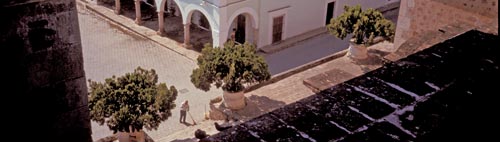
Looking down from the Church at a street sweeper on Calle Comercio.

The Alameda, the commercial center of Alamos, was laid out in 1769.

For Every Action There is An Equal and Opposite Reaction.

With prosperity came hardship. The poor could not afford the inflated prices of merchandise shipped by pack trains from Guadalajara and Mexico City, a hazardous trek that took four months. Indians were used as slaves or cheap labor. Sanitation and disease were a problem: in 1770 alone plague wiped out 6,000 people.

There are times when the Plaza is quiet and reflective and there are times when…

There were continual power struggles between Colonels, Governors, Admirals, Priests, Bishops, and an unending parade of Royal emissaries. The city was heavily taxed by the Crown and by those who controlled the local territory. Political instability raged, treaties and agreements were broken. Alamos had its ups and downs depending on the mood of the day, month and seasons.

Alamos endured two centuries of siege mentality and the prize was control of silver and politics. At one time or another the plaza was overrun by the Spanish, Mexican colonists, Federalists, Liberals, French, Apaches, Independents, Reformers, Pancho Villa, Renegade soldiers and bandits. Along with droughts, pestilence and floods Indians continued constant uprising. Apaches came south to plunder and the independent Tarahumara sought revenge for their forced slavery. By 1849 only 4,000 people remained in Alamos. The miners had left for California’s gold rush.

And Then They Were Gone.

Trade shifted from El Camino Real to coastline ports. Plazas, arches, ornate ironwork, hand carved wood, high ceilings and cobblestone streets fell upon hard times. Roofs caved in leaving two to five foot thick walls open to the sky. The once great patios filled with debris. Despite the wars, bad weather and impoverished neglect. old families stayed, as did some miners. Alamos continued on… the sun would rise another day in this land that remained in a forgotten age.
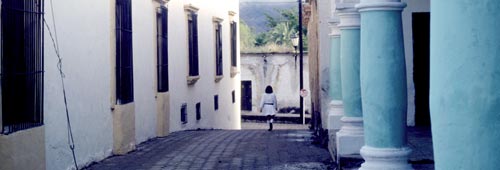
The streets of this National Colonial Monument echo history, here, one is never alone.

The Plaza is peaceful these days. Alamos streets are safe from intruders and invaders.
Town folks sleep well at night knowing tomorrow is another day, another song, another hug, another laugh, another challenge, another moment to be part of Alamos…

And Then Along Came A Man Named Levant.

Not until the 1950’s did a lone American, Levant Alcorn, come to the cobble stone streets, and see the potential for the future. He saw value in the plazas, arches, ornate iron-work, carved wood doors, high ceilings, five-foot thick walls and proximity to the United States International border.

Late in his life, a childlike Levant had a quick smile and a fading memory.

He began to acquire ruined mansions. Soon, he was selling property to independent Americans hoping to realize their dream standard of living. Restoration projects began and continue today. Now, Alamos has over 200 American families as part of its social fabric.
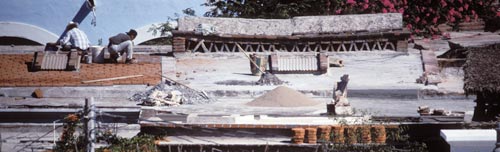
Roofs are always in need of repair. They are also another place to relax.

Each wall, every window and door is a story. Where did it come from, how and when did it get here? Was it made by an Alamos or imported craftsmen?

There is a prideful sense of ownership that comes with undertaking a restoration project that in reality will never end. And there is a humble realization that the casa is really owned by history and this is but a brief opportunity to be part of a continuum of gatekeepers and masters.

Restoration-maintenance is an industry, it is a way of life. Owners, maestros, workers
and house-help are a team that can last a lifetime.

Think of the coats of paint these columns have worn over the past 200 years.

An introduction to a Short History of Alamos, Sonora, Mexico.
“Here is something Special”, Spanish explorer Vasquez de Coronado noted in 1540 as he headed north, passing by tall white rocks on Alamos de Sierra. This is the opening chapter to “A Short History of Alamos” written, filmed and edited by Anders Tomlinson. Narrated by Bruce Miles. Soundtrack by SonicAtomics and Estudiantina de Alamos.

Alamos shares a strong maternal bond, steeped in history, with all the Southwest.
Juan Batista de Anza arrived and departed from Alamos in the spring of 1775 with silver, and local families, to settle “Monterey and the Californias”, including San francisco. Another expedition, five years later, left Alamos to settle Los Angeles.

The conclusion to a Short History of Alamos, Sonora, Mexico embraces the Sierra Madre.
Here, Bishop Reyes’ Cathedral in the Plaza, a three-tiered belfry, shines gold in morning light. Here, looking east, one’s imagination is stirred by the forbidding beauty of the Sierra Madre Occidentals. Together, they shape the Alamos experience.

now and then spacer

To see more Alamos Journal pages.

To return Home.

©2013 Anders Tomlinson, all rights reserved.

Alamos Population History

55… Talking population: past, present and future…

Independence day celebration in Plaza, Alamos, Sonora, Mexico.  Photo by Anders Tomlinson.

Alamos school kids attend Independence Day celebration in the Plaza.

When I think of Alamos I think of its history and my first question is how many Indians were in the area when Diego de Guzman, nephew of Spanish explorer Cortes, passed through the region in 1533 on well traveled native trails. Mexico’s Indian population was estimated to be as high as 25 million in 1519, most living in the great valley of Mexico. By 1523 the considered Indian population had been reduced to 16.8 million and further cut to 6.3 million by 1548. The Indian population continued to decline in 1580 with a thought of 1.9 million and one million in 1605. If these numbers are any way close to what actually happened they speak of apocalyptic times for Mexico’s Indians.

Kissing Alley, Alamos, Sonora, Mexico.  Photo by Anders Tomlinson.

People from many nations have walked, for centuries, on these cobblestones.

The population of Alamos through the years is sketchy at best. The first information I could find was for 1760 when Alamos had an estimated 800 families and a population of 3,400 with 5 – 6 priests. At this time the world’s population was 846 million.
6,000 are estimated to have died from the plague in 1770.
1780 Alamos reaches its largest population, 15,000 to 30,000. Can you imagine what the lifestyles of both rich and poor were in this protected valley at that time?

Funeral procession, Alamos, Sonora, Mexico.  Photo by Anders Tomlinson.

The stories of population are the stories of birth, migration and death.

Alamos populations fluctuated during the 19th Century as mining and political interests rising rose and fell, came and left.1800, Alamos estimated population was 9,000.
1803, there are some 7,900 folks here.
The world’s population reached one billion by 1804.
1825, Alamos population is an estimated 5,000 to 7,000.
1837, an interestingly specific figure of 2,872 people is noted.
1849, 4,300 inhabitants call Alamos home. At this time many miners have, or are, leaving for the California gold fields.
1850 – 1880, the population apparently remains a steady 5,000.
The first official Mexican census was accomplished in 1895.

Night time in the Plaza, Alamos, Sonora, Mexico. Photo by Anders Tomlinson.

Through feast and famine there has been a Sunday promenade in the Plaza.

Here is an outline of the population in 1908: 10,000 for the region. This figure is then broken down to 3,000 in Alamos, 1,000 in Aduana, 1,000 in Navajoa, 1,000 in Promontories, 1,000 in Minas Nuevas and 1,000 in Camoa.
The world’s population reaches two billion in 1927.
The population estimate for the region in 1940, official census count, was 21,477: 11,543 men and 9,835 women. I found another from another source that the population of the city at this time may have been 5,369 hombres and 4,848 mujeres over the age of six.
The world’s population reaches three billion in 1960, four billion in 1974, and five billion in 1987.
The census for 1990 has Alamos with 6.132 inhabitants and a total of 13,000 for the municipality.
The world’s population reaches six billion in 1999 and is forecasted to reach seven billion in 2011.
Today, Alamos population estimates are 13,000 for the city and 30,000 in the municipality.

And here is a thought for the future, the largest migration across the USA – Mexico border may not be south to north, as it has been in the past, but retired baby boomers heading south during the coming decades. Planet Earth is always in motion, always changing.

To see more Alamos Journal pages.

To return Home.

©2013 Anders Tomlinson, all rights reserved.
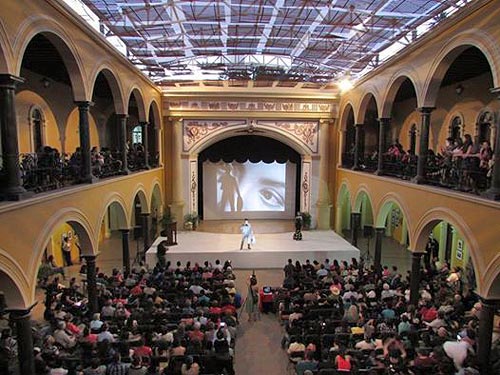
Another Day, Another Age

Somewhere in the mountain Indian’s timeless spell, framed by stately 18th century Spanish architecture, and peppered with modern electronic gadgetry is a small quiet town whose women are beautiful and men handsome. This Shangri-La, at the very end of paved road leading from the west, is Alamos Sonora, Mexico.
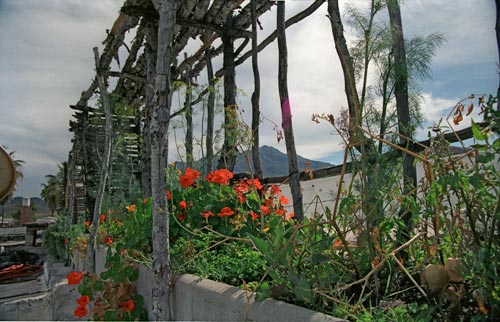
The sun has risen from behind these forbiding ridges, the silence is deafening.

From here, looking east, one’s imagination is stirred by the forbidding, virtually impenetrable
Sierra Madre Occidentals. This is the legendary “Mother Range” protecting Mexico’s great central plateau. Behold ridge after volcanic ridge, separated by deep narrow canyons, marching on for a hundred miles, and climbing to ten thousand feet where giant hawks and eagles soar. The monumental silence is all powerful. Time is reduced to mere sand, worn off of towering rock faces and airborne on the wind. These endless ridges conjure up stark silhouettes of reclining warriors, upon whose barren stomachs humble life persists. Over the horizon, to the southwest, is the famous Copper Canyon region.

Summer time is vibrant as surrounding foothills come alive with green growth.

The eye continues to sweep the horizon and returns, as it always does, to the cathedral’s classically proportioned three-tiered belfry announcing civilization on the half hour.
Past, present and future comes together, in a special way, as one walks down hand swept cobblestone streets listening to laughing children behind bougainvillea-crowned walls.
Here, is the eternal blue sky that is Alamos, Sonora, Mexico.

©2010 Anders Tomlinson, all rights reserved.